
 EN
EN
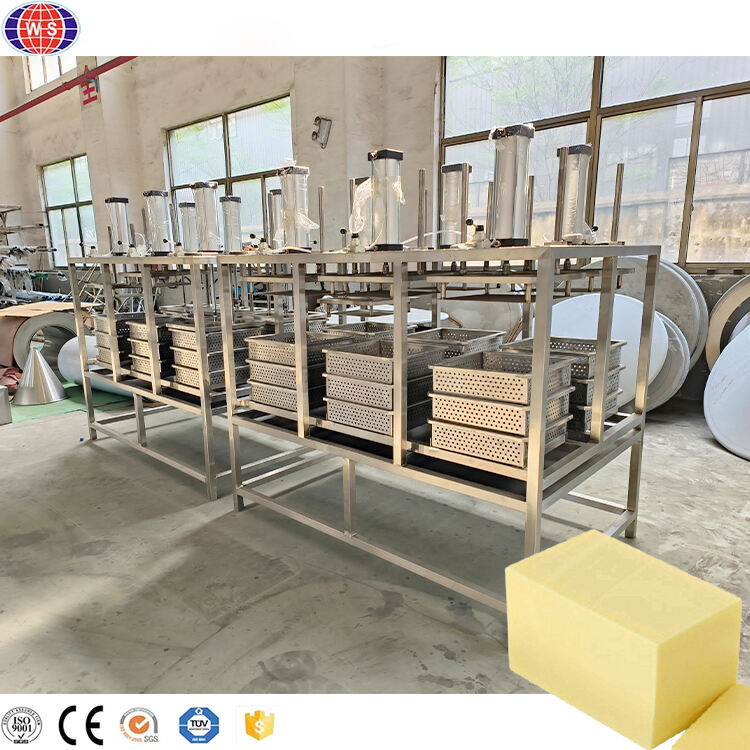
Cheese is one of the most technically demanding dairy products to manufacture at scale. The global cheese market is growing — fueled by rising protein consumption, foodservice demand, and premiumization — and that is attracting a wave of new investors to cheese production. Many of them underestimate what building a cheese production plant actually requires.
This guide is for the investor or plant manager who wants to understand the real decisions involved: what type of cheese to make, what the production process requires, how to size and configure equipment, and what separates a plant that becomes profitable from one that struggles with quality consistency.
Start Here: Cheese Type Determines Everything
Before you look at a single piece of equipment, you need to decide what cheese you are making. This determines your process, equipment list, aging infrastructure, skill requirements, and your market.
|
Cheese Type |
Examples |
Aging |
Complexity |
|
Fresh soft cheese |
Cream cheese, ricotta, quark |
None |
Low-medium |
|
Semi-fresh |
Feta, halloumi, cottage cheese |
0–2 months |
Medium |
|
Semi-hard |
Gouda, Edam, Havarti |
1–6 months |
Medium-high |
|
Hard |
Cheddar, Parmesan |
3–24+ months |
High |
|
Pasta filata (stretched curd) |
Mozzarella, string cheese |
None to short |
Medium-high |
|
Processed cheese |
Slices, spreads, blocks |
None |
Medium (different process) |
Practical recommendation: Start with a cheese type that has local market demand and a shorter aging period. Fresh mozzarella or feta give you faster cash conversion than aged cheddar, which ties up capital in product sitting in ripening rooms for 3–12 months.
The Cheese Production Process
Milk Reception and Quality Control
Cheese quality is directly determined by milk quality. High somatic cell count (SCC), antibiotic residues, or elevated bacterial counts all degrade yield and final product quality.
- Raw milk receiving tank with cooling
- Milk quality testing: SCC tester, antibiotic residue rapid test, fat/protein analyzer
- Minimum milk specification: SCC < 400,000 cells/mL, antibiotic-negative, bacterial count < 100,000 CFU/mL
Pasteurization and Standardization
- Vat pasteurization (63°C / 30 minutes): Traditional, low throughput, used in small-scale operations.
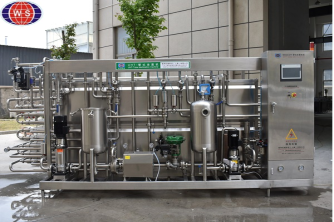
- HTST pasteurization (72°C / 15 seconds): Standard for commercial scale. Requires a plate heat exchanger.
Important: Do not over-pasteurize cheese milk. Excessive heat treatment damages casein structures, reduces rennet efficiency, and lowers yield.
Cheese Vat (The Core of the Process)
The cheese vat is where milk becomes curd. The process inside the vat:
- Starter culture addition: Lactic acid bacteria acidify the milk (reduce pH from ~6.7 to target pH)
- Coagulation: Rennet is added; curd forms over 30–45 minutes
- Cutting: Curd knives cut the curd into uniform pieces (cut size determines moisture retention)
- Cooking/stirring: Temperature and agitation determine syneresis (whey expulsion)
- Whey drainage: Whey is drained off; curd concentration increases
Cheese vats come in two main designs:
- Open horizontal vat: Traditional, easy to inspect and clean, flexible for multiple cheese types.
- Closed horizontal vat: More hygienic, automated stirring and cutting, higher throughput.
Molding and Pressing
- Self-draining molds: Used for soft cheeses (no external press needed).
- Mechanical press: Used for semi-hard and hard cheeses; applies controlled pressure over hours (2–16 hours depending on cheese type).
- Pneumatic continuous press: Higher-throughput design for industrial scale.
Salting
- Brine salting: Cheese is submerged in saturated brine (18–22% NaCl) for hours or days. Most common for semi-hard and hard cheeses.
- Dry salting: Salt rubbed onto curd during production. Used for cheddar and some fresh cheeses.
Brine tanks must be maintained at controlled temperature (10–14°C) and salt concentration. Brine management is often overlooked by first-time operators.
Aging (Ripening Room)
- Temperature control: typically 10–16°C (varies by cheese type)
- Humidity control: 85–95% RH
- Air circulation for rind development
- Turning equipment or automated turning systems for large formats
Calculate aging room capacity by working backward: if you produce 1,000 kg/day and your cheese requires 3 months of aging, you need 90,000 kg of aging capacity. This is where new investors routinely underestimate capital requirements.
Packaging
|
Cheese Type |
Common Packaging |
Equipment |
|
Fresh mozzarella |
Vacuum bag in brine, MAP tray |
Vacuum packer, tray sealer |
|
Block cheddar |
Vacuum bag |
Vacuum packer |
|
Sliced cheese |
MAP film, sliced format |
Slicer, MAP packaging machine |
|
Processed cheese |
Block wrap, individual slice |
Processed cheese line |
|
Spreadable |
Cup fill and seal |
Cup filler |
Equipment You Cannot Overlook
Whey handling: Cheese production generates 8–10 kg of whey per kg of cheese. You must have a plan: whey powder production, whey protein concentrate, or sale to animal feed producers. Whey disposal without treatment is an environmental liability.
Refrigeration system: Sizing refrigeration for milk storage, process temperatures, brine tanks, aging rooms, and finished product cold storage requires careful engineering. Under-specified refrigeration is a common cause of quality failures.
CIP system: Cheese plants have more complex CIP requirements than fluid milk plants because curd residues are much harder to clean than liquid product.
Water treatment: High mineral content can interfere with coagulation and curd structure. Water quality directly affects cheese quality.
Sizing the Plant: Realistic Numbers
A useful rule of thumb: it takes approximately 9–10 liters of cow's milk to produce 1 kg of semi-hard cheese. For mozzarella: approximately 7–8 liters per kg. For hard aged cheese: up to 12 liters per kg.
If you have access to 10,000 liters of raw milk per day, you can produce approximately 1,000–1,100 kg semi-hard cheese/day, or 1,200–1,400 kg fresh mozzarella/day.
Capital investment benchmarks (equipment only, excluding building and utilities):
|
Scale |
Daily Milk Input |
Equipment Cost Estimate |
|
Small artisan |
< 1,000 L |
$50,000 – $150,000 |
|
Small commercial |
1,000 – 5,000 L |
$150,000 – $500,000 |
|
Mid-scale |
5,000 – 20,000 L |
$500,000 – $2,000,000 |
|
Industrial |
20,000 L+ |
$2,000,000+ |
Cheese Production vs. Fluid Milk: The Key Difference
|
Dimension |
Fluid Milk |
Cheese |
|
Process nature |
Mostly physical (separation, pasteurization, homogenization) |
Heavily biological (culture activity, enzymatic coagulation, microbial ripening) |
|
Batch consistency |
Highly consistent run-to-run |
Inherent batch-to-batch variation; skilled decision-making required |
|
Failure detection |
Immediate — quality issues visible quickly |
Often not detected until weeks into aging — thousands of kg at risk |
|
Operator skill requirement |
Equipment operators |
Experienced cheesemakers essential, especially in first 6–12 months |
Key implication: If your plant manager has never made cheese before, invest in hiring an experienced cheesemaker for at least the first 6–12 months of production. This is not optional.
What to Look for in a Cheese Plant Equipment Supplier
- Complete cheese line experience: Ask for reference plants — by cheese type, by capacity, by region. Not just fluid milk experience.
- Whey handling design: A supplier who designs the cheese vat without a plan for whey is selling you half a plant.
- Aging room equipment: Refrigeration systems, turning systems, racks — not just the processing equipment.
- Commissioning process: Cheese line commissioning is more complex than fluid milk because successful production runs require actual biological activity working correctly.
- Culture sourcing guidance: Equipment alone does not make cheese. Your supplier should connect you with starter culture suppliers appropriate for your cheese type.
The Alternative Worth Considering: Processed Cheese
If you want a simpler entry into cheese manufacturing, processed cheese uses natural cheese as a raw material, adds emulsifying salts, and reprocesses it into a stable, consistent product.
Advantages: No aging room required; highly consistent product quality; long shelf life; can use lower-grade natural cheese as input.
Disadvantage: You are buying natural cheese as a raw material, which creates a procurement dependency. For a first-time investor with strong demand for sliced or processed cheese products, this is a viable lower-complexity entry point.
Summary: The Decisions That Define Your Cheese Plant
|
Decision |
Why It Matters |
|
Cheese type |
Determines every downstream equipment and process requirement |
|
Milk supply quality and volume |
Sets realistic production capacity ceiling |
|
Aging infrastructure |
Often the most underestimated capital line item |
|
Whey handling plan |
Required before day one of operation |
|
Skilled cheesemaker |
Cannot be replaced by equipment alone |
|
Supplier with cheese-specific experience |
Generic dairy equipment suppliers often miss cheese-specific requirements |
Cheese is not a commodity — it is a biological product made in an engineered environment. The plants that work are designed around that reality from the start.
Weishu Machinery supplies complete cheese production plant solutions including pasteurization lines, cheese vats, pressing systems, brine tanks, aging room equipment, and packaging lines. Our engineering team has experience with mozzarella, cheddar, gouda, feta, and processed cheese plants across Asia, Africa, and the Middle East. Contact us to discuss your cheese type, daily capacity, and market requirements.
Table of Contents
- Start Here: Cheese Type Determines Everything
- The Cheese Production Process
- Milk Reception and Quality Control
- Pasteurization and Standardization
- Cheese Vat (The Core of the Process)
- Molding and Pressing
- Salting
- Aging (Ripening Room)
- Packaging
- Equipment You Cannot Overlook
- Sizing the Plant: Realistic Numbers
- Cheese Production vs. Fluid Milk: The Key Difference
- What to Look for in a Cheese Plant Equipment Supplier
- The Alternative Worth Considering: Processed Cheese
- Summary: The Decisions That Define Your Cheese Plant