
 EN
EN
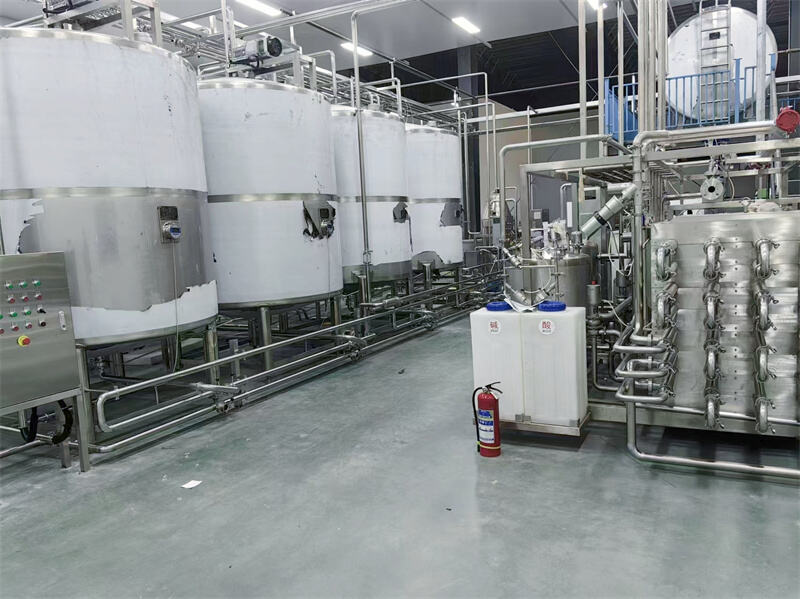
Setting up a milk dairy plant is not just about buying equipment — it is about building a system that runs reliably day after day, meets food safety standards, and turns raw milk into a profitable product.
Most first-time buyers underestimate this. They focus on price per unit and miss the bigger picture: workflow design, capacity planning, and what happens when something breaks down in week three. This guide walks you through the decisions that actually matter.
What Problem Does a Milk Dairy Plant Solve?
Raw milk has a shelf life of hours. A dairy plant transforms that fragile raw material into a stable, sellable product — pasteurized fresh milk, UHT long-life milk, flavored milk, cream, or butter — that reaches consumers safely.
Without the right processing infrastructure, you cannot:
- Meet food safety regulations in your target market
- Scale beyond local direct sales
- Compete on product consistency and shelf life
- Attract retail or institutional buyers who require traceable, certified supply chains
A properly configured milk dairy plant solves all of these at once.
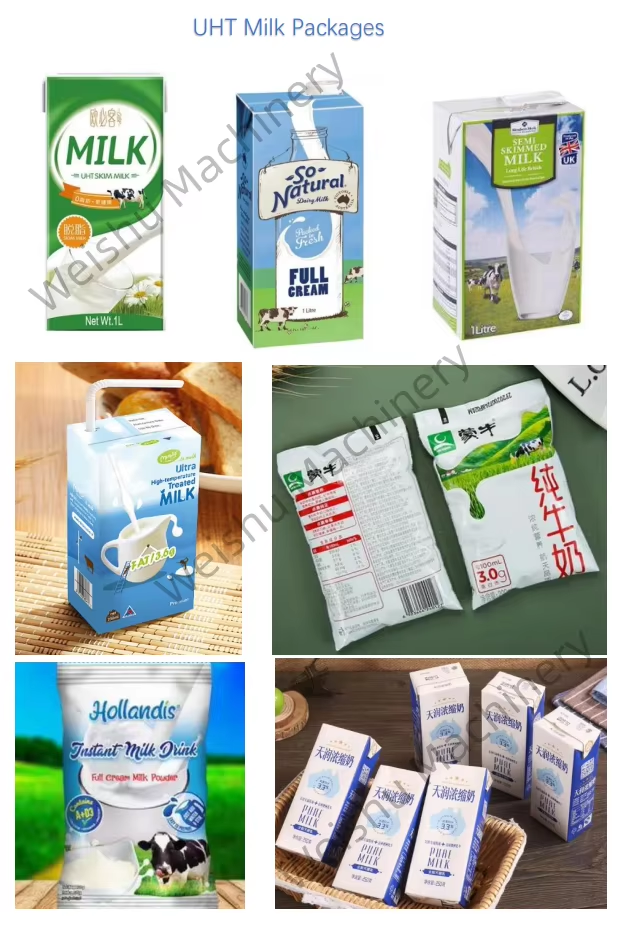
Define Your Output Before Choosing Equipment
The single most common mistake is selecting equipment before deciding what product you are making. Your product determines everything downstream.
Ask yourself:
- Pasteurized fresh milk (short shelf life, requires cold chain)?
- UHT long-life milk (6–12 months shelf life, no refrigeration in distribution)?
- Flavored milk or dairy-based beverages?
- Cream, butter, or milk powder as by-products?
Each product requires a different processing line. A UHT milk plant needs a high-temperature sterilization system and aseptic filling. A pasteurized milk plant runs at lower temperatures with a different packaging setup.
Rule of thumb: Nail down your product range first. Then size the plant around it.
Calculate the Right Capacity
Capacity is measured in liters or tons of raw milk processed per day. Common entry-level configurations:
|
Daily Capacity |
Typical Use Case |
|
500 L – 2,000 L/day |
Small cooperative, farm-level processing |
|
2,000 L – 10,000 L/day |
Regional brand, emerging market SME |
|
10,000 L – 50,000 L/day |
Mid-scale commercial dairy |
|
50,000 L+/day |
Large industrial plant |
A practical rule: size your plant at 1.5–2x your current raw milk supply, leaving room to grow without an immediate second capital raise. Also account for seasonal variation in milk supply.
Understand the Core Equipment Modules
A complete milk dairy plant is a sequence of connected modules. Here is the standard processing flow:
Milk Reception & Storage
- Raw milk receiving tank: Stainless steel, insulated, with agitation. Keeps milk at 2–4°C on arrival.
- Centrifugal pump: Transfers milk between stages hygienically.
- Flow meter: Measures incoming volume for traceability and billing.
Separation & Standardization
- Cream separator: Centrifugal separation of fat content. Allows standardization to target fat percentage.
- Milk standardization unit: Blends cream back in at precise ratios. Critical for product consistency.
Pasteurization or UHT Sterilization
This is the core food safety step.
- Plate heat exchanger (PHE) pasteurizer: For pasteurized fresh milk. Heats milk to 72°C for 15 seconds (HTST), then cools rapidly.
- Tubular UHT sterilizer: For UHT milk. Heats to 135–145°C for 2–4 seconds. Requires aseptic downstream handling.
- Homogenizer: Breaks fat globules for uniform texture and prevents cream separation.
Filling & Packaging
|
Product |
Common Packaging |
Machine Type |
|
Pasteurized fresh milk |
HDPE bottle, gable-top carton |
Bottle filler / carton filler |
|
UHT milk |
Aseptic carton, aseptic pouch |
Aseptic filling machine |
|
Cream / butter |
HDPE tub, foil-sealed cup |
Cream filler |
CIP (Clean-in-Place) System
Every dairy plant needs automated CIP. This system circulates hot water, caustic, and acid solutions through all product-contact surfaces without dismantling the line. Without a proper CIP setup, your plant will fail food safety audits.
Utilities
- Refrigeration / chiller system: Maintains cold chain across reception, storage, and cold product holding.
- Steam boiler: Supplies heat for pasteurization and sterilization.
- Compressed air system: Drives pneumatic components and packaging machines.
- Water treatment system: Produces clean water for CIP and product formulation.
Layout and Workflow Design
Equipment placement is as important as equipment selection. Poor layout creates cross-contamination risks, slows production, and makes cleaning difficult.
Key principles:
- Separate raw and processed zones: Raw milk reception must be physically separated from the pasteurization and packaging areas.
- One-direction product flow: Milk should move forward through the process without backtracking across zones.
- Adequate space for maintenance: Every piece of equipment needs clearance for inspection, cleaning, and repair.
- Cold room placement: Position cold storage adjacent to packaging, not across the facility floor.
For a plant processing 5,000 L/day, a minimum floor area of 400–600 m² is realistic when you include processing, storage, utilities, and office space.
Certifications and Compliance
- ISO 9001: Quality management system
- ISO 22000 / HACCP: Food safety management
- CE marking: Required for equipment sold into European markets
- Local food authority approval: Varies by country — factor this into your timeline
Work backward from your target certification to understand which equipment specifications you need. A supplier that cannot provide CE-certified equipment will cost you the audit, not just the machine.
What to Expect After Equipment Delivery
Equipment delivery is not the end of the project — it is the halfway point. After delivery, budget time and resources for:
- Installation and commissioning: Connecting all modules, running water trials, verifying CIP cycles. Typically 2–6 weeks.
- Operator training: Your team needs to run the line correctly from day one. Insist on on-site training from the equipment supplier.
- Validation runs: Running the line with real milk, measuring output quality, adjusting process parameters. Allow 1–4 weeks.
- Spare parts inventory: Identify critical-path components and stock them locally. Ask for a recommended spare parts list before signing the contract.
Choosing Between Chinese, European, and Local Equipment
|
Equipment Origin |
Key Characteristics |
|
European (GEA, Tetra Pak, Alfa Laval) |
Highest quality, global service network, 6–18 month lead time, high cost |
|
Chinese (mid-to-high tier) |
30–60% of European cost, CE certification available, capable of full-line supply |
|
Local / regional |
Low cost, accessible parts, limited capacity and food safety compliance |
For most first-time investors in the 2,000–20,000 L/day range, a vetted Chinese full-line supplier offers the best balance of capability, cost, and delivery timeline. The key word is vetted — request factory visit records, customer references in your region, and third-party test certificates before committing.
Key Questions to Ask Any Milk Dairy Plant Supplier
- What is the exact capacity tested (not rated) for this line?
- What certifications does the equipment carry? (CE, ISO, local equivalents)
- What is included in commissioning — who covers travel costs?
- What is the spare parts lead time from your factory to my country?
- What warranty terms apply, and what voids the warranty?
- Do you have references from clients in my country or region?
Summary: The Decisions That Define Your Plant
|
Decision |
Why It Matters |
|
Product type (pasteurized vs. UHT) |
Determines processing technology and packaging line |
|
Daily capacity |
Drives equipment sizing and capital requirement |
|
Layout and workflow design |
Affects compliance, efficiency, and daily operating cost |
|
CIP system |
Non-negotiable for food safety certification |
|
Supplier vetting |
The largest single risk factor for first-time investors |
A milk dairy plant is a multi-year investment. Getting the design right at the start costs far less than retrofitting a plant that was built around the wrong assumptions.
Weishu Machinery supplies complete milk dairy plant solutions from 500 L to 100,000 L/day, including pasteurization lines, UHT systems, filling machines, and CIP systems. Contact our engineering team to discuss your specific capacity requirements and product range.
Table of Contents
- What Problem Does a Milk Dairy Plant Solve?
- Define Your Output Before Choosing Equipment
- Calculate the Right Capacity
- Understand the Core Equipment Modules
- Certifications and Compliance
- What to Expect After Equipment Delivery
- Choosing Between Chinese, European, and Local Equipment
- Key Questions to Ask Any Milk Dairy Plant Supplier
- Summary: The Decisions That Define Your Plant