 EN
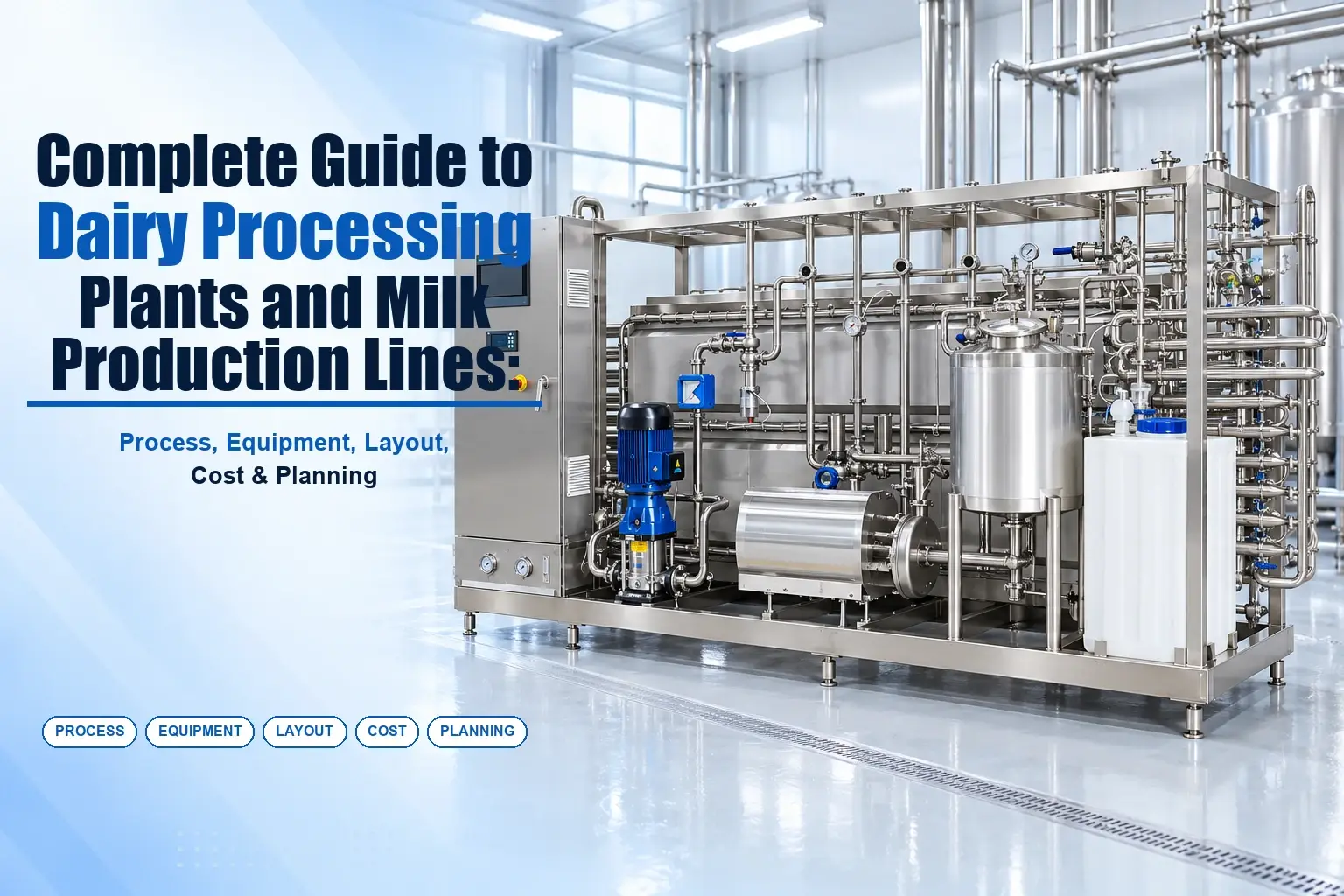
Establishing a modern dairy processing plant requires careful engineering, reliable fluid management, and tactical site design. For dairy farm owners, food company investors, and project engineers, setting up a highly efficient turnkey dairy plant involves transforming raw milk into safe, consumer-ready products. At Weishu, we believe that true plant optimization balances strict microbiological safety with intelligent energy recovery. This master guide breaks down the core fluid processes, essential machinery layouts, workshop designs, and total investment considerations required to successfully deploy a commercial milk production line.
What Is the Complete Process Flow in a Modern Dairy Processing Plant?
A commercial milk processing line relies on a series of integrated sanitary processes designed to preserve product quality while ensuring complete food safety. The journey from farm milk reception to final retail packaging follows a strict, temperature-controlled fluid loop.
Raw Milk Reception and Cold Chain Storage Tanks
The process begins at the raw milk reception block. Insulated dairy tankers deliver raw milk to the factory, where it immediately passes through duplex inline filters and plate chillers to drop its temperature below 4°C. This rapid cooling halts bacterial reproduction. The chilled milk is then transferred into large stainless steel silos. These storage tanks feature gentle agitation systems and specialized jackets to maintain constant cold chain integrity before processing.
Standardization, Homogenization, and Thermal Pasteurization
From the storage silos, milk enters the core treatment block. First, a sanitary centrifugal separator splits the milk into cream and skim milk, allowing precise fat content standardization. Next, the milk passes through a high-pressure homogenizer operating up to 250 bar. This mechanical force breaks down fat globules, preventing cream separation and ensuring a smooth, uniform texture. Finally, the fluid undergoes pasteurization or Ultra-High Temperature (UHT) treatment to eliminate pathogenic bacteria and extend shelf life.
What Machinery Defines the Essential Dairy Plant Equipment List?
Selecting high-purity dairy plant equipment requires matching machinery capacities with your specific raw milk supply and packaging goals. Rather than buying separate, uncoordinated components, modern factories utilize modular processing lines to ensure seamless fluid handling.
Weishu engineers custom, automated processing systems tailored to various raw milk source flows. The matrix below outlines the standardized technical frameworks across different factory scales:
| Industrial Plant Scale | Small-Scale Dairy Plant (10 Tons/Day) | Medium-Scale Dairy Plant (50 Tons/Day) | Large-Scale Dairy Plant (100+ Tons/Day) |
|---|---|---|---|
| Primary Product Focus | Pasteurized Fresh Milk & Fresh Yogurt | UHT Milk, Pasteurized Milk, Extended-Shelf-Life (ESL) Dairy | Flexible Multi-Lines: UHT, Yogurt, Butter, Milk Powder |
| Core Pasteurization & UHT Blocks | Skid-Mounted Plate Pasteurizer Unit | Continuous Multi-Stage Plate & Tubular UHT Sterilizers | High-Capacity Tubular Sterilization Units with Aseptic Buffers |
| Homogenizer Configuration | 2-Stage Mechanical Homogenizer (1,500 LPH) | Hydraulic High-Pressure Homogenizer (6,000 LPH) | Multi-Unit Automated Homogenization Arrays (12,000+ LPH) |
| CIP System Configuration | Manual/Semi-Automatic 3-Tank CIP Station | Fully Automatic 4-Tank Centralized CIP System | Multi-Channel Distributed Intelligent CIP Matrix |
| Automation & PLC Level | Semi-Automatic Control Panel with Touchscreen | Fully Automated Central Siemens PLC with HMI | Distributed Control System (DCS) with Central Control Room |
How Does Workshop Layout Design Optimize Turnkey Dairy Plant Costs?
The architectural and equipment layout within a dairy processing plant directly impacts your initial capital budget and daily production safety. A professional layout separates raw milk processing areas from cleanroom filling zones to prevent cross-contamination.
How Short Pipe Layouts Prevent Costly Energy Loss
A major error in factory planning is placing processing units too far from filling blocks or utility rooms. Long product pipelines significantly increase product retention, complicate clean-in-place cycles, and waste thermal energy. Weishu optimizes layouts by placing thermal sterilizers close to aseptic filling lines. This tight physical arrangement shortens piping runs, minimizes heat dissipation, reduces pressure drops, and saves substantial utility costs.
Calculating Total Ownership Cost: Machinery Price vs. Long-Term Utility Bills
When budgeting for a milk production line, smart investors focus on Total Ownership Cost (TCO) rather than just the initial purchase price. Inefficient, low-cost machinery consumes excessive steam, electricity, and water, which quickly inflates operating expenses. Investing in energy-efficient equipment with high-efficiency thermal recovery systems allows plants to reuse up to 90% of their heat. This balance lowers utility usage and protects long-term business margins.
How to Partner with Weishu for a Turnkey Dairy Plant Project?
Building a processing plant requires specialized engineering insight. As an experienced provider of turnkey dairy plant systems, Weishu manages the complete project lifecycle—from your initial ideas to full factory operation.
Our comprehensive project delivery process covers:
- Process Engineering & PFD/P&ID Design: Customizing fluid flow diagrams tailored to your specific product recipes.
- 3D Workshop Layout Modeling: Creating exact 3D equipment layouts to maximize space utilization.
- High-Purity Machinery Manufacturing: Fabricating premium SUS 304/316L stainless steel equipment under strict sanitary standards.
- Onsite Installation & Commissioning: Deploying experienced field engineers to handle mechanical assembly, electrical wiring, and system integration.
- System Optimization & Training: Conducting automated CIP/SIP validation and training your local team for seamless operations.
Planning a new dairy production line or upgrading an existing processing factory?Contact the Weishu industrial application team today. Share your expected daily raw milk intake volume, intended product varieties (e.g., fresh milk, long-life UHT carton milk, Greek yogurt), and available workshop dimensions. Our process engineering team will deliver a customized factory layout plan and a detailed technical equipment quotation within 24 hours.
Table of Contents
- What Is the Complete Process Flow in a Modern Dairy Processing Plant?
- Standardization, Homogenization, and Thermal Pasteurization
- What Machinery Defines the Essential Dairy Plant Equipment List?
- How Does Workshop Layout Design Optimize Turnkey Dairy Plant Costs?
- How Short Pipe Layouts Prevent Costly Energy Loss
- Calculating Total Ownership Cost: Machinery Price vs. Long-Term Utility Bills
- How to Partner with Weishu for a Turnkey Dairy Plant Project?