
 EN
EN
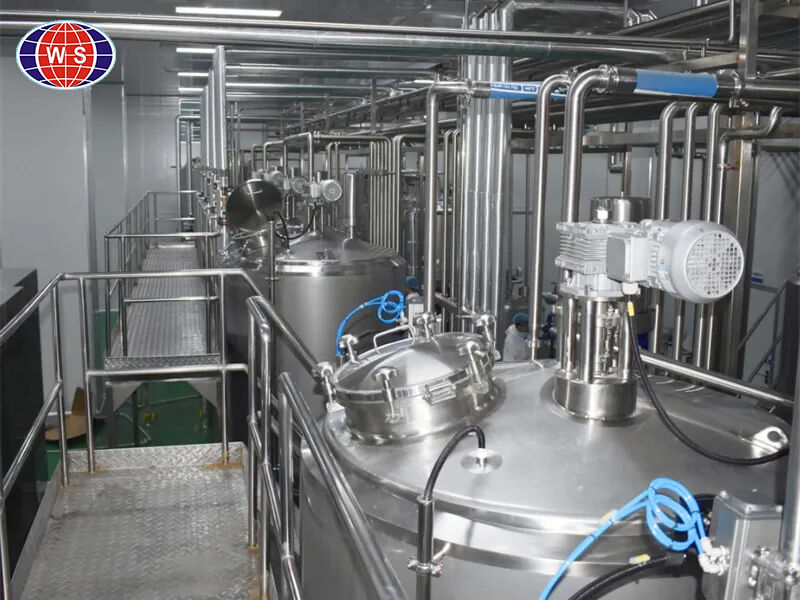
Establishing a high-quality Ice Cream Production Line is a top priority for investors entering the dairy processing industry
This blog explores the essential machinery and technical processes required to launch a successful ice cream manufacturing business
1. Budget Overview for Small-Scale Factories
The investment for a complete small-scale ice cream production line typically ranges from $100,000 to $600,000 USD
2. Core Production Processes & Essential Machinery
The texture of premium ice cream depends on the precise distribution of fat globules and the smoothness of the mixture
Mixing and Raw Material Preparation
- Ingredient Strategy: Using whole milk with high fat content is recommended for a rich texture
. - Quality Enhancement: Adding milk powder can improve the "overrun" (fluffiness) and mouthfeel while simultaneously reducing overall production costs
. - Primary Equipment: This stage requires water purifiers, mixing tanks, and aging tanks
.
Critical Technology: Two-Stage High-Pressure Homogenization
The quality of the Milk Homogenizer directly impacts the final product's consistency
- The Mechanism: In an ice cream line, a two-stage high-pressure homogenizer is used, consisting of two valves and a reciprocating plunger pump
. - Technical Precision: The first stage (high pressure) breaks fat globules down to 2 µm. The second stage (low pressure) ensures these particles are perfectly dispersed
. - Result: This process creates a delicate, lubricating physical structure that defines high-quality ice cream
.
Pasteurization and Freezing
- Safety: Pasteurizers or plate heat exchangers are utilized to eliminate bacteria and ensure food safety
. - Transformation: After aging and freezing, the mixture undergoes cryogenic shaping to reach its final form
.
3. Filling and Packaging Solutions
Depending on your target market, you can choose between various Ice Cream Filling Machines
| Product Type | Process Characteristics | Daily Capacity |
| Direct-Fill Products |
Products are gripped directly from trays, ensuring zero damage and a high yield rate |
Approx. 110,000 units |
| Sliced/Extruded Products |
Multi-functional tunnel lines combining slicing and filling technologies for diverse product formats |
Approx. 100,000 units |
Summary
Building a competitive ice cream production line requires a focus on core technologies—specifically homogenization and specialized filling