
 EN
EN
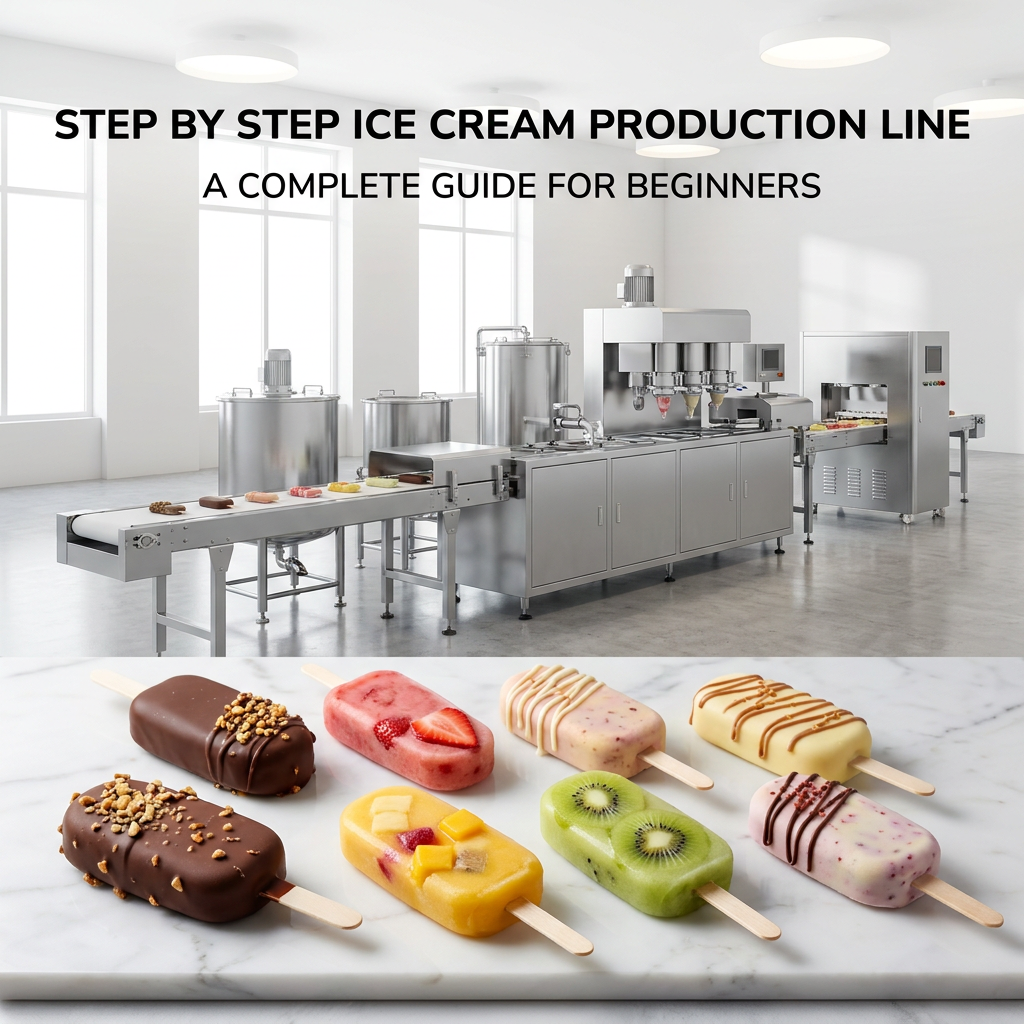
What Is a step-by-step ice cream production line?
For those new to the ice cream manufacturing industry, "Step by Step Ice Cream Production Line" is not a complicated concept. It refers to a standardized and streamlined ice cream production process, from raw material input to finished product packaging. Each step is interconnected: mixing, sterilization, homogenization, aging, freezing, filling, hardening, and packaging.
The most common mistake beginners make is skipping steps or getting the order wrong, which leads to poor taste and inconsistent yields.
Therefore, understanding the logic of "step-by-step" processes is the first step to success., streamlined ice cream production process, from raw material input to finished-product
Why You Need a Structured Ice Cream Production Process
Many small factory owners or entrepreneurs ask in the early stages: Do I really need a standardized production line?
The answer is: Absolutely, for three reasons:
1. Consistency – Customers will only repurchase if the taste, texture, and overrun of each batch of ice cream remain consistent.
2. Efficiency – Structured processes reduce waiting time and human error.
3. Scalability – From 100 liters to 1000 liters per day, simply replicate the steps, rather than reinventing the process.
Decision point: If you plan to run an ice cream business long-term, establishing standardized processes as early as possible is much less costly than modifying them later.
Key Components of an Ice Cream Production Line
Before delving into the specific steps, you need to understand the core equipment of the entire production line. Here are the key components of a standard ice cream production line:
- Mixing Tank – Used to mix milk powder, sugar, oil, water, etc., into a uniform liquid.
- Pasteurizer – Kills harmful microorganisms and ensures food safety.
- Homogenizer – refines fat particles, prevents separation, and improves texture.
- Ice Cream Freezer – the core equipment responsible for freezing and incorporating air (controlling overrun).
- Filling Machine – This machine fills frozen ice cream into cups, cones, or boxes.
- Hardening Tunnel / Cold Storage – Rapidly freezes to below -18°C, ensuring morphological stability.
These devices form a complete step-by-step ice cream production line. Companies like Weishu Intelligent Machinery offer modular configurations, allowing for flexible setups suitable for factories of different sizes.
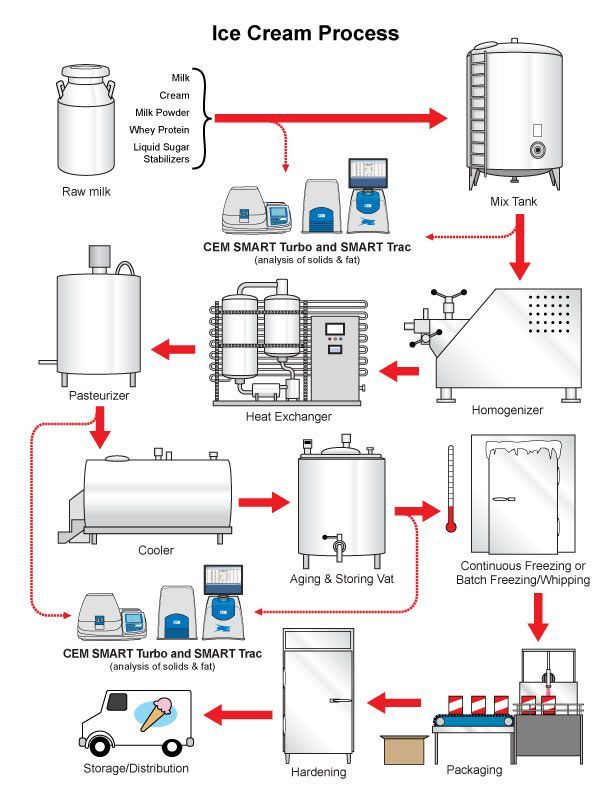
Step by Step Ice Cream Production Process
This is the most crucial part of the entire article. Below are the complete 8 production steps , none of which can be skipped.
Step 1 – Raw Material Mixing & Blending
Add milk powder, sugar, stabilizer, emulsifier, oil, and water to the Mixing Tank according to the formula.
The water temperature is typically maintained at 40–50°C to help the dry powder dissolve fully.
Stir for approximately 10–20 minutes until all ingredients are evenly mixed.
Step 2 – Pasteurization
The mixture is pumped into the Pasteurizer.
Typical sterilization conditions: 85°C / 15–30 seconds (high-temperature short-time sterilization).
This step kills pathogens and denatures some proteins, which is beneficial for subsequent homogenization.
Step 3 – Homogenization
At 60–70°C, the liquid is passed through a homogenizer , typically at a pressure of 150–200 bar.
Homogenization breaks down fat globules, preventing cream fat from rising to the surface and resulting in a smoother ice cream texture.
Step 4 – Aging
After homogenization, the liquid is transferred to an aging tank and left to stand at 4°C for 4–24 hours.
Aging allows fat crystallization, protein hydration, and the full action of stabilizers, which is key to a smooth texture.
This step is often skipped by beginners , resulting in a noticeable icy texture.
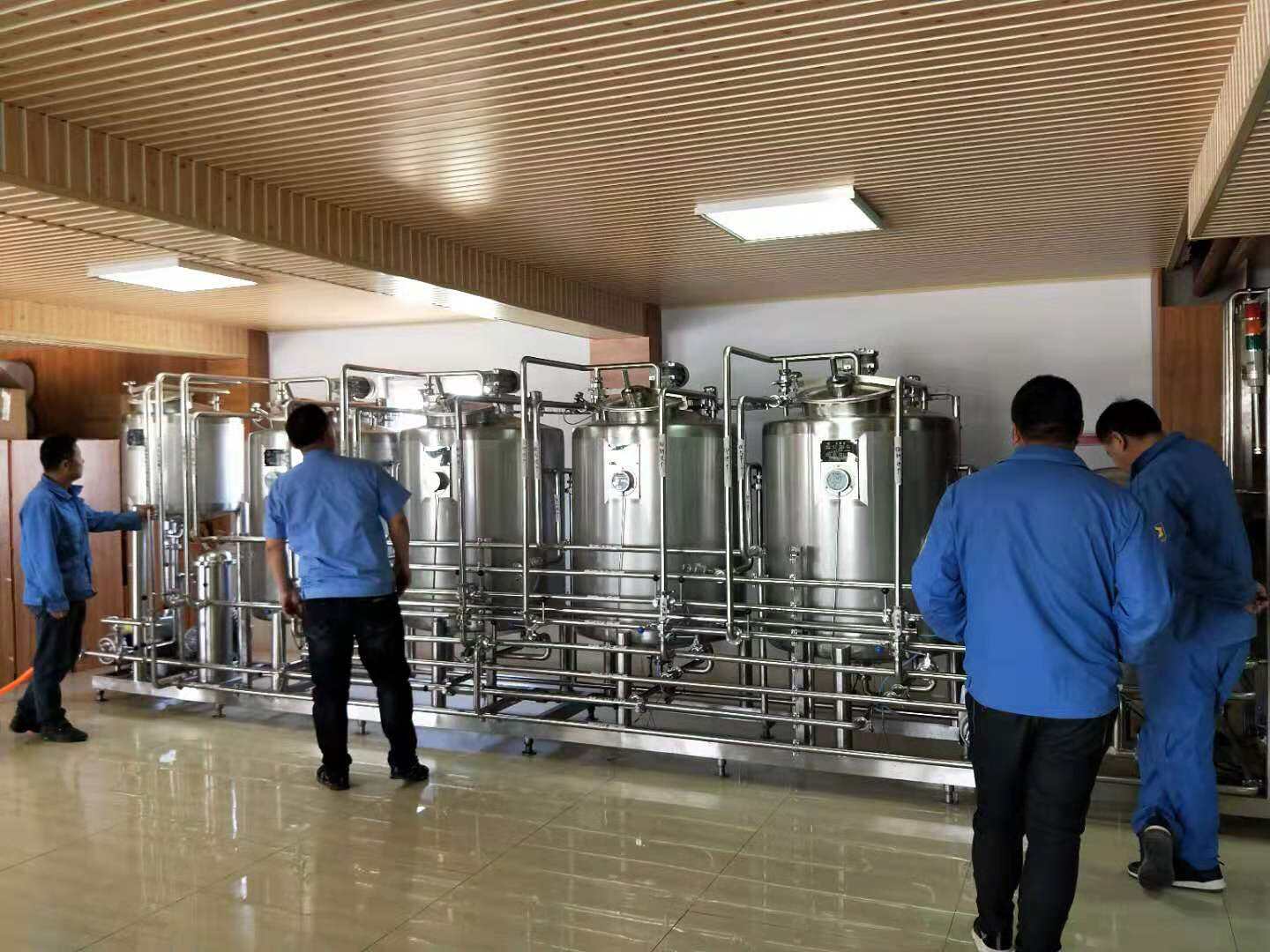
Step 5 – Freezing & Overrun Control
The aged liquid is placed into the Ice Cream Freezer.
It is rapidly frozen at -5°C to -6°C while incorporating air.
Overrun is typically controlled at 80–100% (home use) or 50–80% (high-end commercial use).
Too high an overrun results in an overly airy texture; too low an overrun results in a harsh texture.
Step 6 – Filling & Molding
The semi-soft ice cream, after freezing, enters the Filling Machine .
It can be filled into cups, cones, boxes, or irregularly shaped molds.
Speed, weight, and temperature need to be precisely controlled.
Step 7 – Hardening
After filling, the product enters a hardening tunnel or a cold storage room below -25°C.
Time: 6–12 hours, allowing the core temperature to drop to -18°C.
This step ensures the ice cream does not deform during storage and transportation.
Step 8 – Packaging & Storage
Finally, the hardened ice cream is packaged (cardboard box, plastic seal, label).
Store at -18°C or lower to avoid temperature fluctuations that could cause ice crystals.
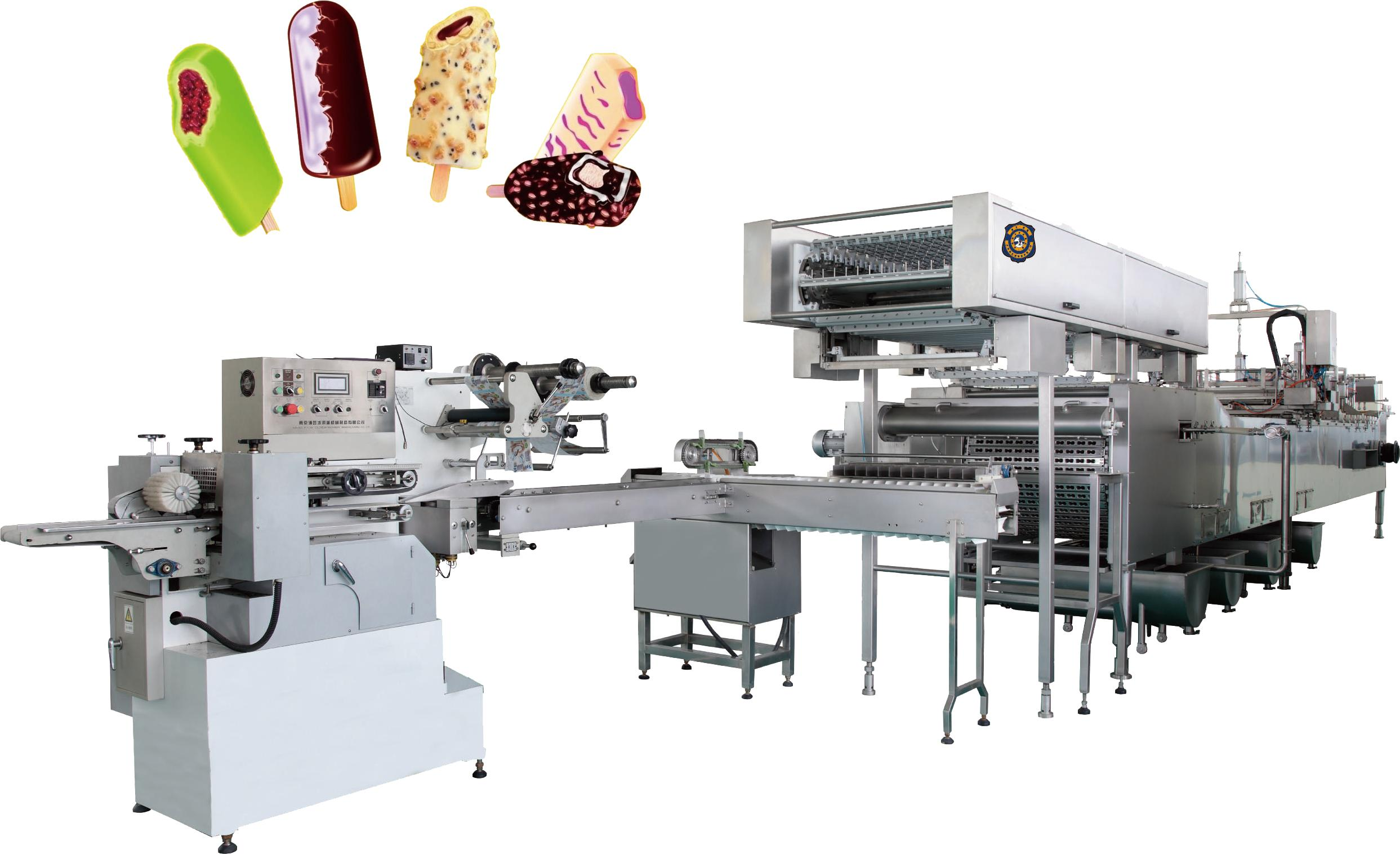
Common Mistakes Beginners Make (And How to Avoid Them)
Based on our experience serving clients, the following mistakes are the most common:
Skipping the Aging Step
Consequence : The ice cream has a noticeable icy texture and a rough mouthfeel.
Solution : Strictly adhere to the 4–24 hour aging process; do not skip this step, even if you are rushing to meet a deadline.
Incorrect Overrun Levels
Consequences : Too light, like foam; too heavy, like ice.
Solution : Use a freezer with expansion control and perform regular checks.
Poor Hygiene Between Batches
Consequences : Excessive bacteria levels, batch flavor contamination.
Solution : Perform CIP (Clean-in-Place) procedures after each production run.
How to Choose the Right Ice Cream Production Line for Your Business
Once you understand the complete process, this question will naturally arise: What kind of production line should I buy?
Several criteria for judgment:
- Daily output
-
- 100–500L/day → Experimental or small-scale production line
- 500–2000L/day → Standard medium-sized production line
- 2000L+/day → Fully automated large-scale production line
- Automation level
-
- Manual/Semi-automatic (suitable for startups)
- Fully automated (suitable for large-scale production)
- Support and Services
-
- Do you provide process training?
- Do you provide long-term spare parts?
Weishu Intelligent Machinery offers options ranging from lab models to complete factory production lines, and supports configuration optimization by step-by-step process flow.
Why Weishu Intelligent Machinery Simplifies Your Production Journey
Choosing an ice cream production line is not just about buying equipment, but also about buying a stable production process.
Weishu Intelligent Machinery differentiates itself in this regard by:
- Process -first : We help you confirm the parameters for each step (aging time, freezing temperature, expansion target).
- Modular design : You can start with sterilization + homogenization + freezing, and later add filling and hardening modules.
- Chinese + English technical support : Suitable for both export-oriented and local factories.
We don't just sell machines; we help you implement a Step by Step Ice Cream Production Line.
Summarize
Building an ice cream production line from scratch hinges on understanding the purpose and sequence of each step.
This article provides a comprehensive overview of the entire process, from mixing, sterilization, homogenization, aging, freezing, filling, hardening to packaging, and points out the most common mistakes beginners make.
If you are planning your first production line, feel free to refer to the steps in this article and contact Weishu Intelligent Machinery for a configuration plan tailored to your capacity and products.
Table of Contents
- What Is a step-by-step ice cream production line?
- Why You Need a Structured Ice Cream Production Process
- Key Components of an Ice Cream Production Line
- Step by Step Ice Cream Production Process
- Common Mistakes Beginners Make (And How to Avoid Them)
- How to Choose the Right Ice Cream Production Line for Your Business
- Why Weishu Intelligent Machinery Simplifies Your Production Journey
- Summarize