
 EN
EN
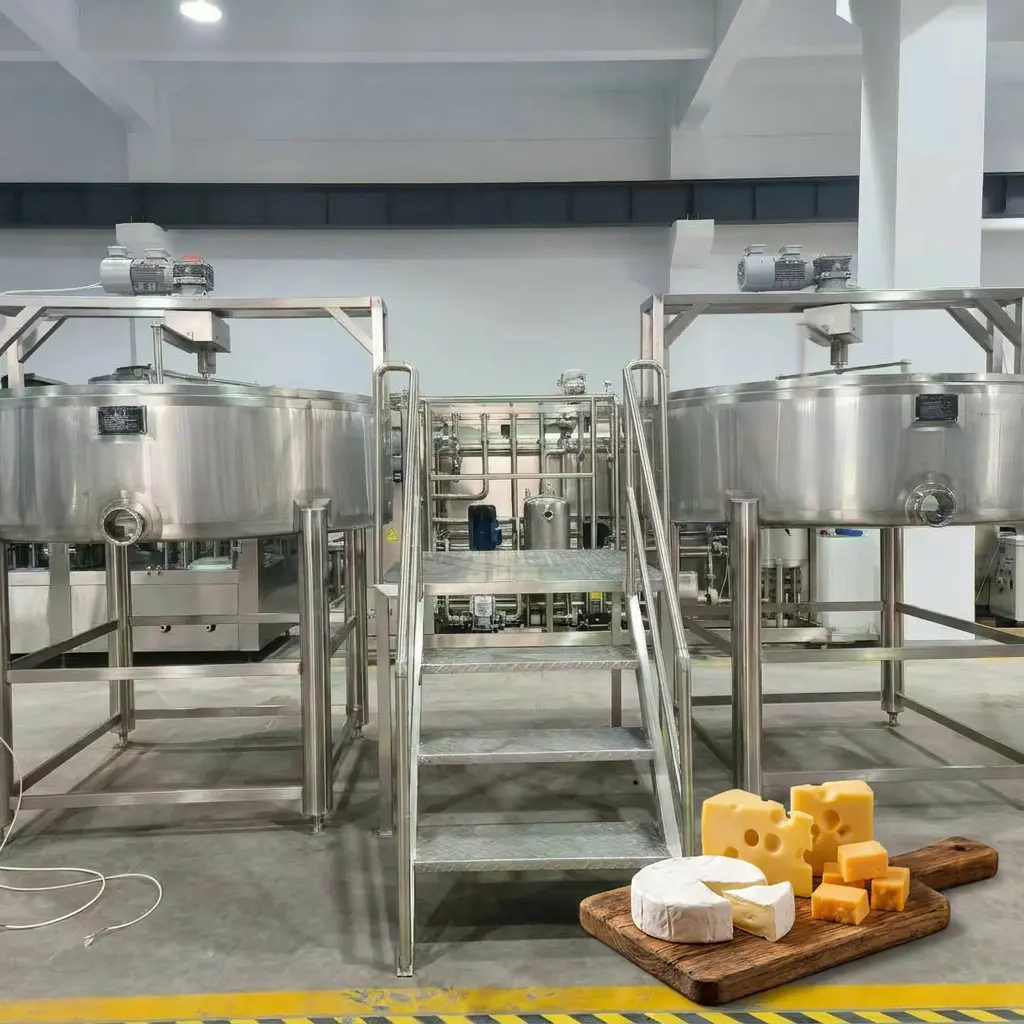
Introduction – The Hidden Gap in Industrial Cheese Production
In industrial dairy manufacturing, it is a common assumption that production output is determined primarily by equipment capacity. However, real-world operations show a different reality: two cheese factories using nearly identical machinery can produce significantly different output levels.
The reason is not always the machine—it is how the machine is used, controlled, and maintained. This performance gap is where leading producers separate themselves from average operations.
Why identical equipment delivers different output in real factories
Even when factories invest in the same cheese vats, pasteurizers, and curd handling systems, output varies due to differences in operational discipline, process timing, and control precision. Small inefficiencies—such as delayed curd cutting or inconsistent stirring cycles—accumulate into major production losses over time.
The role of process control vs. machinery capability
Equipment sets the upper limit of production capacity, but process control determines how close a factory gets to that limit. Temperature stability, microbial control, and timing accuracy often matter more than raw machine specifications.
How leading producers achieve higher cheese factory efficiency
High-performing plants focus on standardization, automation, and data-driven control systems. They reduce variability in every stage of production, ensuring consistent yield and minimal waste across batches.
Understanding Cheese Factory Efficiency in Modern Dairy Operations
Cheese factory efficiency is no longer defined only by output volume. It now includes yield optimization, downtime reduction, energy usage, and product consistency.
Definition of cheese factory efficiency in B2B manufacturing
In industrial terms, cheese factory efficiency refers to the ratio of usable cheese output to total input resources, including milk, labor, energy, and time. Higher efficiency means more product with fewer losses.
Key performance indicators (KPIs) in cheese production lines
Common KPIs include:
- Milk-to-cheese conversion rate
- Batch cycle time
- Equipment utilization rate
- Downtime percentage
- Product rejection rate
Yield rate, downtime, and waste reduction explained
Yield rate measures how much cheese is produced from raw milk. Downtime reflects how long production stops due to cleaning or mechanical issues. Waste reduction focuses on minimizing curd loss and over-processing.
Benchmarking efficiency across industrial cheese plants
Factories often compare performance against industry benchmarks to identify inefficiencies. Even a 2–3% improvement in yield can translate into significant annual profit gains.
Why Cheese Factory Efficiency Varies Even with the Same Equipment
Identical equipment does not guarantee identical results. The operational environment plays a critical role in performance differences.
Operator skill and production discipline differences
Experienced operators can identify subtle changes in curd texture, temperature response, and fermentation timing. In contrast, inconsistent manual control leads to variation in product quality and yield.
Variations in milk quality and raw material consistency
Milk composition fluctuates based on season, feed, and supplier. Without proper standardization, these variations directly affect coagulation efficiency and final cheese yield.
Process timing, temperature, and microbial control issues
Cheese production is highly sensitive to timing and temperature control. Even small deviations can lead to under-set curd or over-fermentation, reducing usable output.
Maintenance gaps and unnoticed equipment wear
Worn mixing blades, inefficient heating elements, or delayed calibration can significantly reduce machine performance, even if the equipment appears fully functional.
Core Bottlenecks That Limit Industrial Cheese Output
Most production limitations come from hidden inefficiencies rather than obvious breakdowns.
Inefficient curd handling and transfer systems
Manual or slow transfer systems increase curd breakage and product loss during movement between processing stages.
Inconsistent coagulation and cutting processes
Uneven curd cutting leads to moisture imbalance, affecting both yield and texture consistency.
Manual interventions slowing down production cycles
Frequent human intervention increases variability and reduces overall throughput, especially in high-volume operations.
Cleaning and sanitation downtime inefficiencies
Improperly scheduled cleaning cycles can extend downtime and reduce daily production capacity.
The Role of Automation in Scaling Cheese Production
Automation is no longer optional in large-scale dairy operations—it is a core driver of efficiency.
Transitioning from manual to semi-automated production lines
Many factories begin with hybrid systems that combine manual oversight with automated control to gradually improve efficiency.
How automation improves consistency and reduces human error
Automated systems standardize temperature control, stirring speed, and timing, eliminating variability caused by human operation.
Data-driven control systems in dairy production
Modern systems use sensors and PLC controls to continuously monitor process conditions, enabling real-time adjustments.
Cost vs. ROI of automation upgrades
Although automation requires upfront investment, most factories recover costs through reduced labor, higher yield, and lower waste within a predictable timeframe.
Automated Cheese Vat and Its Impact on Production Output
The cheese vat is the core unit of production, and its efficiency directly impacts overall factory performance.
What is an automated cheese vat and how it works
An automated cheese vat is a controlled processing vessel that manages heating, stirring, coagulation, and cutting through programmed systems rather than manual operation.
Temperature and agitation precision control systems
Precision sensors ensure stable heating and uniform agitation, which improves curd formation and consistency.
Continuous production advantages over batch processing
Continuous or semi-continuous systems reduce downtime between batches, significantly increasing daily output capacity.
Integration with CIP (Clean-In-Place) systems
Automated cleaning systems reduce sanitation time and ensure consistent hygiene standards without manual disassembly.
How Weishu Intelligent Machinery designs high-efficiency vats
Weishu Intelligent Machinery focuses on optimizing thermal stability, curd uniformity, and automation integration to maximize yield efficiency in industrial environments.
Case Scenario – How Two Plants with Identical Equipment Achieve Different Outputs
This comparison highlights how process design influences production results more than hardware.
Plant A: manual-heavy operations and inefficiencies
Plant A relies heavily on manual adjustments, inconsistent timing, and reactive maintenance, leading to frequent downtime and lower yield.
Plant B: automated control and optimized workflow
Plant B integrates automation, standardized SOPs, and real-time monitoring, resulting in stable output and reduced waste.
Comparative analysis of yield, cost, and downtime
Even with identical equipment, Plant B achieves higher yield rates, lower labor costs, and significantly reduced unplanned downtime.
Lessons learned from industrial benchmarking
The key takeaway is that process optimization delivers more impact than equipment upgrades alone.
Upgrading to a High-Performance System with Weishu Intelligent Machinery
Improving cheese factory efficiency requires both technology and system-level thinking.
Equipment upgrade roadmap for factory owners
A phased upgrade approach allows factories to transition from manual systems to fully automated production with minimal disruption.
Modular expansion options for growing demand
Modular systems allow producers to scale capacity without rebuilding entire production lines.
Custom engineering solutions for different cheese types
Different cheeses require different curd handling and processing parameters, which can be customized through intelligent machinery design.
Support, installation, and training services
Proper implementation support ensures that operators can fully utilize automation systems and maintain consistent output performance.
Conclusion – Closing the Efficiency Gap in Cheese Production
The difference between average and high-performing cheese factories is not always equipment—it is efficiency engineering.
Key takeaways for improving factory output
Factories that focus on process control, automation, and maintenance discipline consistently outperform those relying only on machinery upgrades.
Why automation and process design matter more than equipment alone
Automation ensures consistency, while process design ensures optimal use of every production stage.
Strategic next steps for dairy manufacturers
For manufacturers aiming to scale production, investing in intelligent systems such as those developed by Weishu Intelligent Machinery is a strategic move toward long-term competitiveness and higher profitability.
Table of Contents
- Introduction – The Hidden Gap in Industrial Cheese Production
- Understanding Cheese Factory Efficiency in Modern Dairy Operations
- Why Cheese Factory Efficiency Varies Even with the Same Equipment
- Core Bottlenecks That Limit Industrial Cheese Output
- The Role of Automation in Scaling Cheese Production
- Automated Cheese Vat and Its Impact on Production Output
- Case Scenario – How Two Plants with Identical Equipment Achieve Different Outputs
- Upgrading to a High-Performance System with Weishu Intelligent Machinery
- Conclusion – Closing the Efficiency Gap in Cheese Production