
 EN
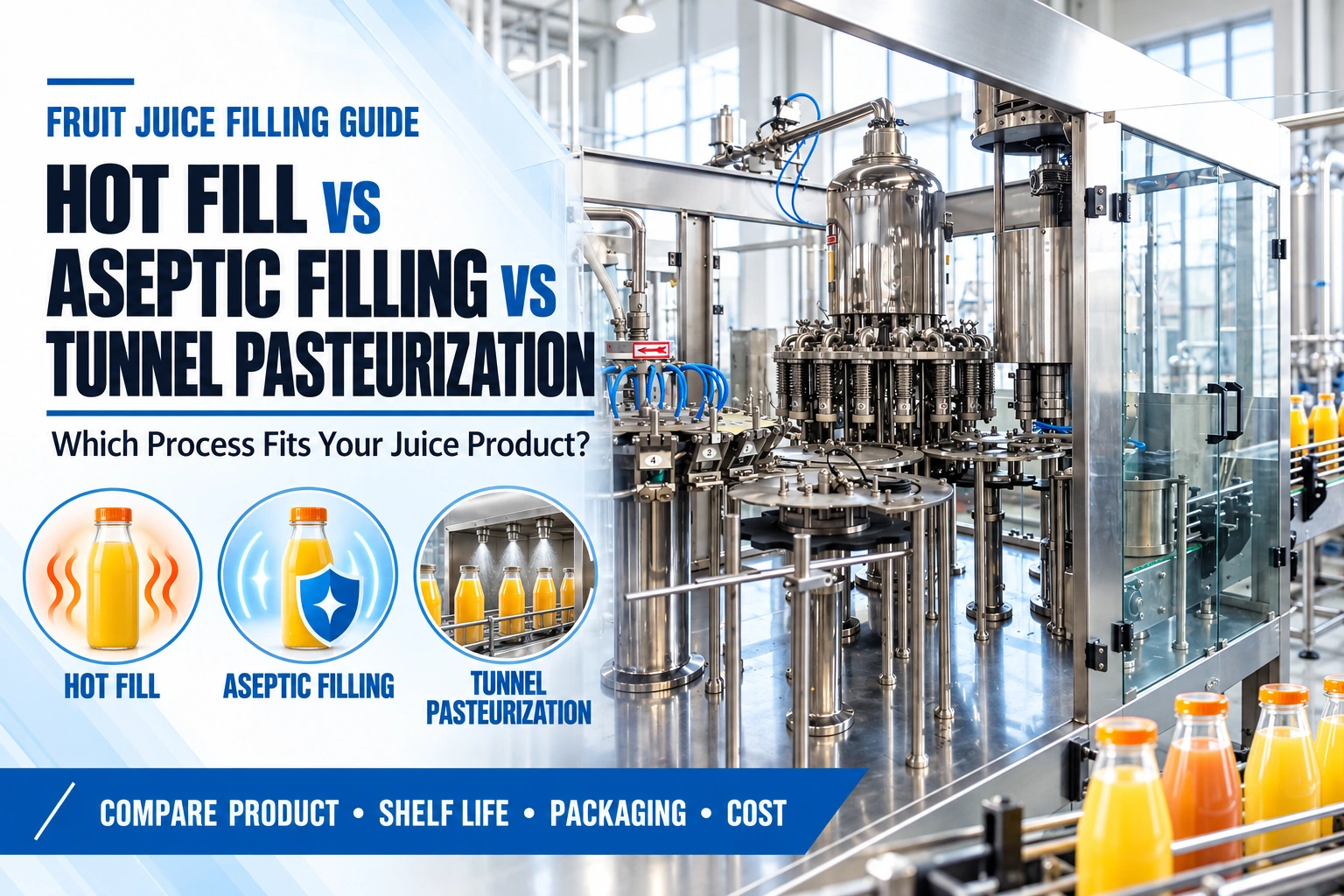
What is the Main Difference Between Hot Fill, Aseptic Filling, and Tunnel Pasteurization?
The fundamental distinction among these three methods lies in the sequential timing of product sterilization relative to the filling and sealing stages. Understanding this order of operations dictates the mechanical complexity and cleanroom environment required for your factory floor.
How Does the Hot Filling Process Work?
What Makes Aseptic Cold Filling Different?
Aseptic cold filling separates the sterilization of the beverage from the sterilization of the packaging. The juice undergoes High-Temperature Short-Time (HTST) or Ultra-High Temperature (UHT) treatment (up to 135°C to 150°C for just a few seconds) and is immediately flashed cooled to ambient room temperature (~30°C). Concurrently, the empty bottles and caps are sterilized separately using chemical agents like hydrogen peroxide. The cold juice is then filled and sealed inside an isolation chamber or a HEPA-filtered cleanroom environment. Because the product is already cool when bottled, it requires no subsequent cooling tunnel.
Why Does Packaging Choice Dictate Your Juice Sterilization Method?
PET Bottles vs Glass Containers: Thermal Limitations
- Hot Fill Requirements: Because the juice enters the container at over 80°C, standard PET bottles will warp, collapse, or deform. Hot filling forces you to buy specialized, heavy-gauge heat-resistant PET bottles (often featuring vacuum panels and a reinforced neck finish). These specialized bottles are significantly heavier and can cost up to 30% to 50% more per unit than standard plastic bottles.
- Aseptic Filling Flexibility: Since the juice is filled at ambient temperature, there is zero thermal stress on the packaging. This allows you to use standard, lightweight PET bottles, flexible pouches, or cartons (such as Tetra Pak). Over millions of production runs, the savings on plastic resin alone can offset the initial machinery costs.Tunnel Pasteurization Constraints: Tunnel pasteurization is highly restrictive. It is exceptionally well-suited for glass bottles and aluminum cans because they can withstand being drenched in cascading hot water sprays. However, it is largely incompatible with lightweight plastics due to the prolonged heat exposure inside the tunnel.
Hot Fill vs Aseptic Filling for Juice: Comprehensive ROI and Performance Comparison
| Technical & Economic Factors | Hot Fill Line | Aseptic Cold Fill Line | Tunnel Pasteurization |
|---|---|---|---|
| Juice Filling Temperature | High Hot (80-85°C) | Ambient (25-30°C) | Ambient or Cold |
| Thermal Damage to Product | Moderate to High (Slow cooling) | Minimal (Flash pasteurization) | High (Prolonged tunnel bake) |
| Bottle Material Cost | Expensive (Heat-set PET / Glass) | Economical (Lightweight PET / Cartons) | Rigid Glass or Aluminum Cans |
| Energy & Water Footprint | Moderate | Low (Efficient heat recovery) | Exceptionally High (Steam & Spray water) |
| Typical Shelf Life | 6 to 12 Months | 12 to 18 Months (Preservative-free) | 6 to 12 Months |
| Initial Machinery CAPEX | Lower | Higher |
Moderate to High |
Initial Equipment Price vs Long-Term Operational Costs
Shelf Life, Flavor Retention, and Nutrient Quality
How to Choose the Right Juice Bottling Line for Your Production Goals?
- Juice Chemistry (pH & Pulp): If you are running high-acid juices (pH < 4.5) like apple, orange, or berry juices with minimal pulp or fiber, both hot fill and aseptic are viable. However, if your product line expands into low-acid vegetable blends, plant-based milks, or juices containing delicate fruit particulates, an aseptic cold filling system for beverage production becomes mandatory to prevent spoilage and separation.
- Target Market Premium: If you are competing in the value segment where flavor nuances are secondary to low initial setup costs, hot fill is a reliable, time-tested entry point. But if your brand targets the premium, organic, "not-from-concentrate" (NFC), or clean-label demographic, only aseptic filling preserves the premium sensory experience your consumers demand.
- Production Volume Scalability: For small-scale regional batches, the simplicity of hot fill or a compact tunnel pasteurizer can make sense. For high-speed, continuous industrial scales running millions of bottles monthly, the resin savings from lightweight aseptic bottles radically accelerate factory profitability.
Why B2B Juice Producers Partner with Weishu for Custom Turnkey Solutions?
Table of Contents
- What is the Main Difference Between Hot Fill, Aseptic Filling, and Tunnel Pasteurization?
- How Does the Hot Filling Process Work?
- What Makes Aseptic Cold Filling Different?
- Why Does Packaging Choice Dictate Your Juice Sterilization Method?
- Hot Fill vs Aseptic Filling for Juice: Comprehensive ROI and Performance Comparison
- Initial Equipment Price vs Long-Term Operational Costs
- Shelf Life, Flavor Retention, and Nutrient Quality
- How to Choose the Right Juice Bottling Line for Your Production Goals?
- Why B2B Juice Producers Partner with Weishu for Custom Turnkey Solutions?