
 EN
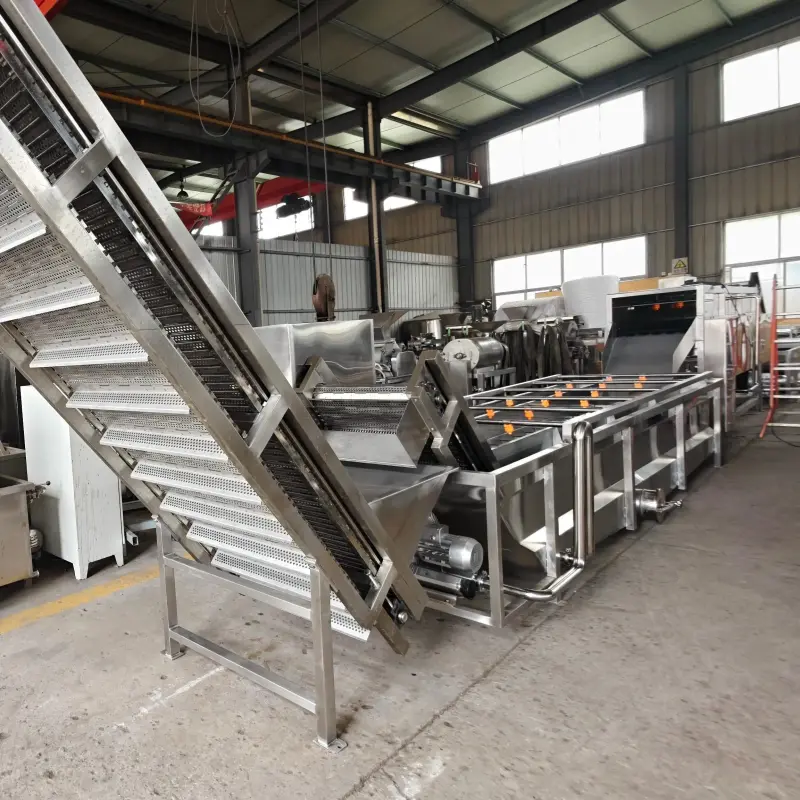
Many businesses confuse a fruit juice processing plant with a production line, leading to catastrophic financial missteps. For instance, a client planning a 5,000-ton annual capacity juice project miscalculated the plant infrastructure budget into the line equipment cost. This single blind spot completely broke their capital chain, forcing the entire project into a costly, indefinite standstill.
This common oversight does not just delay your launch; it triggers a domino effect of mismatched capacity and wasted capital. Operating a high-speed line within an under-designed facility creates severe bottlenecks, slashing your projected ROI by up to 40%. Failing to deliver orders on time will instantly damage your market reputation and alienate your B2B buyers.
To safeguard your investment, this article will clearly break down the 3 critical differences between a full processing plant and a production line. Weishu Machinery will analyze specific equipment configurations and capital allocation strategies to ensure your technical blueprint aligns with your budget. Read on to discover the exact framework that saved a recent client $150,000 in unnecessary infrastructure corrections.
1. Decoding the Concepts: What Are They Exactly?
To build a profitable beverage enterprise, global procurement managers and investors must first separate the container from the content. In industrial engineering, we analyze this through a macro-versus-micro lens.
Fruit Juice Processing Plant (The Macro View)
Think of a fruit juice processing plant as the entire operational ecosystem. It is the legal, structural, and regulatory shell that houses your industrial operations. When an engineer designs a plant, they are not looking at a single machine; they are designing specialized civil engineering foundations, robust Class 100,000 HVAC cleanrooms, complex wastewater treatment facilities, chemical storage areas, and advanced logistics loading zones. The plant must comply with local zoning laws, environmental impact assessments, and strict food safety building codes before a single piece of machinery is bolted down.
Fruit Juice Production Line (The Micro View)
Conversely, a fruit juice production line is the mechanical core. It is the specific, sequential cluster of automated machinery dedicated strictly to physical and chemical processing. The scope of a production line begins when raw fruits enter the receiving hopper and ends when sealed bottles are palletized. Its architecture focuses entirely on processing stages: raw material washing, juice extraction, thermal pasteurization, deaeration, and aseptic filling.
The Golden Rule of Beverage Engineering
As a general rule of thumb for project planners: The production line lives inside the processing plant. You cannot build a financially viable business by budgeting for the machine while ignoring the building. Investing in a high-tech filling machine without designing a food-grade drainage facility to support it is like buying a jet engine without building a runway.
2. The 3 Critical Differences You Cannot Ignore
When reviewing blueprints and balance sheets, confusing these two terms will distort your financial planning. Here are the three fundamental differences that distinguish a plant from a line.
| Dimension | Fruit Juice Processing Plant (The Entity) | Fruit Juice Production Line (The Tool) |
|---|---|---|
| Primary Scope | Infrastructure, Compliance, Civil Design | Mechanical Execution, Product Quality |
| Budget Split | 60% of Typical Total Investment | 40% of Typical Total Investment |
| Asset Lifecycle | 20+ Years (Long-term Infrastructure) | 3–5 Years (Subject to Upgrades) |
Scope & Function: Ecosystem vs. Execution
The processing plant manages compliance, structural safety, and industrial utilities. It is responsible for delivering the consistent steam, processed water, and high-voltage electricity needed to run operations. The production line, on the other hand, cares only about throughput and product metrics. It monitors parameters like Brix levels, pulp control, and shelf-life stability. The plant creates the controlled environment; the line executes the recipe.
Investment & Capital Allocation: The 60/40 Split
This is where most food-sector startups fail. A realistic, field-tested financial model splits a greenfield beverage project into a 60% budget for plant/infrastructure and a 40% budget for production line machinery. If you have a total capital reserve of $1 million, you cannot spend $800,000 on a high-speed bottling line. Doing so leaves you with insufficient capital to fund the necessary epoxy flooring, industrial piping, and municipal power grid connections required to turn that machinery on.
Lifecycle & Flexibility: 20-Year Assets vs. 5-Year Upgrades
A production line is highly dynamic. As consumer trends shift from clear apple juice to cloudy NFC (Not-From-Concentrate) citrus blends, or from PET bottles to glass jars, your production line will require modifications, retrofitting, or replacement within 3 to 5 years. However, the plant infrastructure is a 20+ year fixed asset. Industrial walls, drainage gradients, and high-capacity electrical substations are permanent structures. They must be engineered with enough spatial flexibility to accommodate future machinery upgrades without requiring a complete building demolition.
The Mistake
The investor allocated 100% of their available capital to purchase a state-of-the-art, high-speed European filling line. They assumed that "buying the best line" equated to "building the best factory." Consequently, they left zero capital reserves for mandatory food-grade flooring, dedicated sloped drainage channels, or the specialized ventilation systems required by local regulatory bodies.
The Consequence
When local food safety authorities inspected the facility, the project immediately failed its audit. The high-end machinery sat idle on bare concrete floors while the company faced a 6-month production delay to secure emergency financing. Meanwhile, raw material supply contracts expired, and the brand faced severe contractual penalties from retail buyers, completely breaking their capital chain.
The Engineering Fix
Our team stepped in to restructure the project into a 2-phase modular expansion. We scaled back the immediate automation level of the packaging line, freeing up the capital necessary to construct compliant cleanrooms and structural foundations. This allowed the client to pass the audit, start processing juice, and use their operational cash flow to gradually phase in the remaining machinery over the following year. This restructuring framework saved the client $150,000 in structural modification costs.
4. Engineer’s Checklist: 4 Steps to Plan Your Juice Project Correctly
If you are a project manager or procurement director preparing to launch a commercial fruit juice venture, utilize this four-step checklist to avoid common engineering traps.
- Step 1: Define Your Output on an Hourly Scale
Never design a facility based solely on a vague annual figure like "5,000 tons per year." Industrial equipment vendors calculate performance by hour. Base your plant's physical footprint and raw material storage bays on a precise daily or hourly capacity, such as 5 tons per hour. This ensures your loading docks can physically handle the raw material transit volume. - Step 2: Map Your Utility Loads Preemptively
An industrial pasteurizer or UHT unit demands an enormous amount of thermal energy. Before buying equipment, verify that your plant's steam boiler and cooling towers can support the intense thermal shock cycles required by the sterilization process. A mismatch here will cause your line to stall frequently due to pressure drops. - Step 3: Factor in Local Regulations Before Procurement
Food safety codes vary significantly between jurisdictions. Design your plant's clean zones and raw material separation walls according to specific FDA, CE, or HACCP standards before signing a purchasing agreement with an equipment manufacturer. Re-engineering a machine to meet a standard after it has arrived at your facility is twice as expensive. - Step 4: Partner with an Integrated EPC Contractor
Hiring separate building contractors and equipment vendors frequently leads to blame-shifting when layout errors occur. Working with an experienced EPC (Engineering, Procurement, and Construction) partner ensures that the team designing the plant infrastructure is fully aligned with the team building the production line machinery, keeping your project on time and within budget.
Conclusion & Call to Action (CTA)
In the competitive beverage industry, a successful project requires balancing your overall vision with mechanical precision. The plant is your battlefield, and the production line is your weapon. To build a sustainable, highly efficient business, your infrastructure and your equipment must be engineered to work in perfect synchronization.
Are you planning a new fruit juice manufacturing facility or upgrading an existing operation? Don't let layout omissions or budgeting blind spots delay your launch.
Please [Contact Our Engineering Team Today] to schedule a free, 30-minute technical layout consultation.
Table of Contents
- 1. Decoding the Concepts: What Are They Exactly?
- 2. The 3 Critical Differences You Cannot Ignore
- Scope & Function: Ecosystem vs. Execution
- Investment & Capital Allocation: The 60/40 Split
- The Mistake
- 4. Engineer’s Checklist: 4 Steps to Plan Your Juice Project Correctly
- Conclusion & Call to Action (CTA)