
 EN
EN
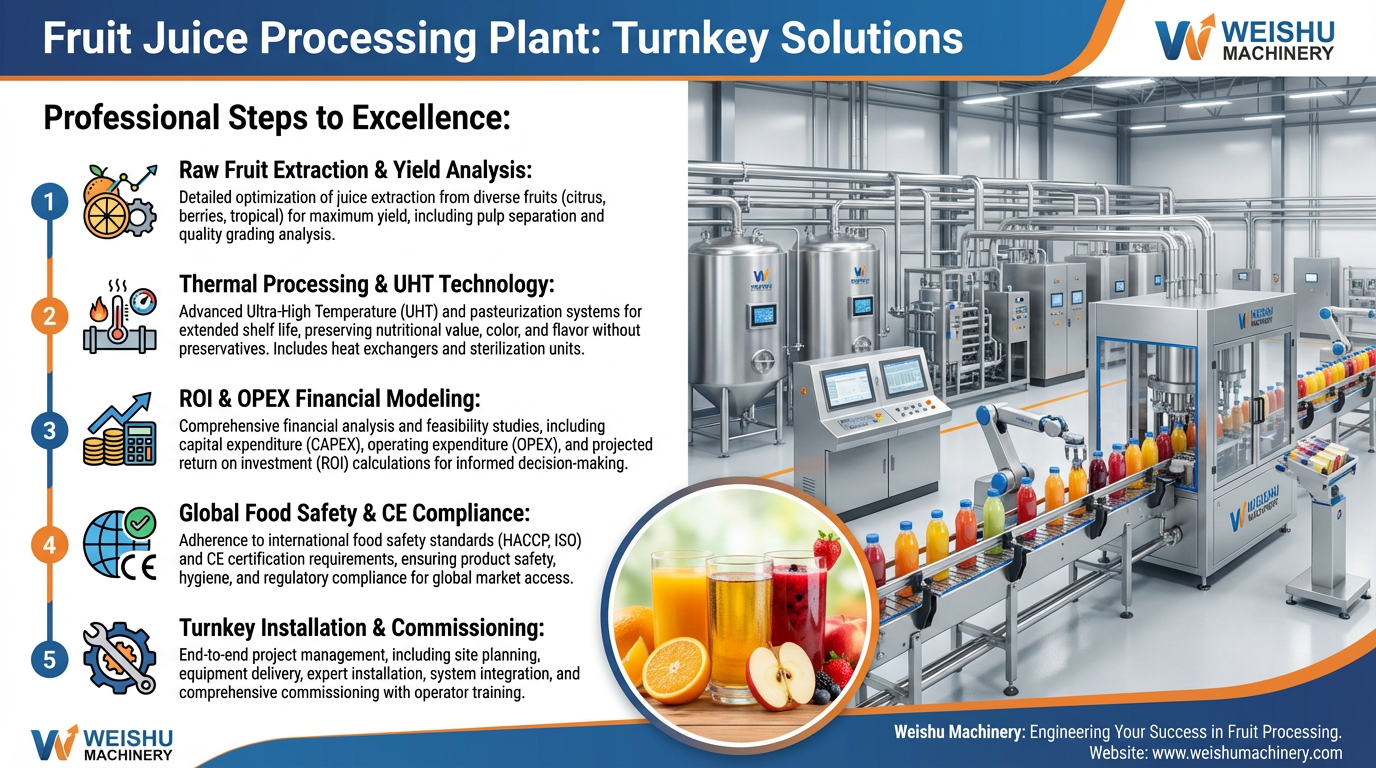
The global fruit juice market is shifting. Investors are moving away from simple juice blending towards sophisticated fruit juice processing plants that handle everything from fresh fruit intake to final packaging. In 2026, the success of a juice factory isn't just defined by its machines, but by its yield optimization and operational efficiency.
This guide, based on Weishu Machinery's turnkey project experience, answers the most critical questions: What equipment is mandatory? How do you calculate ROI? And how can you minimize setup costs without sacrificing quality?
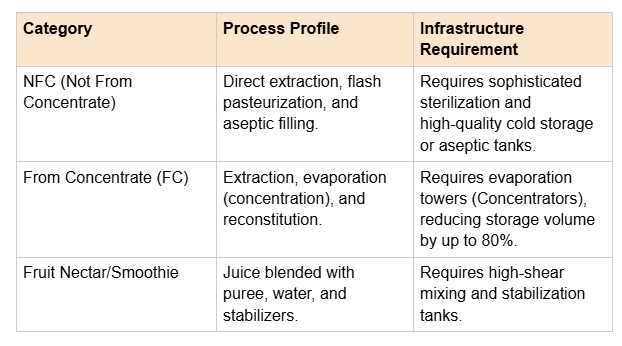
The Foundational Choice: NFC vs. From Concentrate
This decision defines your entire CAPEX (Capital Expenditure).
The Economics: Understanding Setup Cost and ROI
A common question is: 'How much does it cost to set up a juice factory?' The range is wide ($50k to $1M+), but the breakdown is consistent:
• Machinery (CAPEX): Typically 50-70% of initial investment. Includes extraction, pasteurization, and filling lines.
• Utilities: 15-20%. Steam boilers, water treatment, and compressed air are often underestimated by first-time buyers.
• Operational Cost (OPEX): Driven by energy efficiency and juice yield. A line with 90% heat recovery can save 15% in monthly utility bills compared to low-end alternatives.
ROI Factor: The juice yield (how many liters per ton of fruit) is your primary profit driver. Weishu Machinery focuses on proprietary extraction heads that increase yield by 3-5% over standard industry vats.
Core Processing Modules: From Fruit to Bottle
Fruit Reception and Cleaning
• Bubble Washing Machine: Gentle cleaning with high-pressure air agitation.
• Sorting Conveyor: Critical for preventing rotten fruit from ruining an entire batch flavor.
Extraction (The Technical Heart)
Different fruits require different technologies:
• Cup Extractors: For citrus (Orange/Lemon) to avoid skin oil contamination.
• Pulper & Finisher: For mangoes, peaches, and berries to separate skins and seeds from pulp.
• Screw Press: For fibrous fruits like pineapples.
Clarification and Pasteurization
• Centrifugal Separator: Removes pulp particles for clear juice production.
• UHT/HTST Pasteurizer: Weishu's tubular heat exchangers achieve 90% heat recovery, significantly lowering steam consumption.
Filling & Packaging: Hot Fill vs. Aseptic
Your packaging determines shelf life and retail strategy.
• Hot Fill (Glass/HDPE): Lower equipment cost, but limited flavor preservation compared to aseptic.
• Aseptic Cold Fill (PET/Carton): Highest flavor quality and 12-month shelf life. Mandatory for premium NFC juice brands.
Common 'People Also Ask' Answered
Q: How much space is required for a 2 ton/hr juice line?
A: Typically 600-1,000 square meters, depending on the number of final products and packaging types.
Q: What is the shelf life of NFC juice?
A: With aseptic processing and packaging, 6–12 months at ambient temperature; 30–60 days if cold-filled and refrigerated.
Summary: Turnkey Excellence with Weishu Machinery
A fruit juice processing plant is a biological system. Every temperature drop or pressure change matters. Weishu Machinery provides more than equipment; we provide the 'process soul'—ensuring that every ton of fruit you buy results in the maximum possible volume of high-quality juice.
Weishu Machinery provides integrated solutions from 500L/H to 20,000L/H. Our turnkey service includes feasibility reports, layout design, and full-line installation. Contact our engineering team to start your juice project today.
Table of Contents
- The Foundational Choice: NFC vs. From Concentrate
- The Economics: Understanding Setup Cost and ROI
- Core Processing Modules: From Fruit to Bottle
- Extraction (The Technical Heart)
- Clarification and Pasteurization
- Filling & Packaging: Hot Fill vs. Aseptic
- Common 'People Also Ask' Answered
- Summary: Turnkey Excellence with Weishu Machinery