
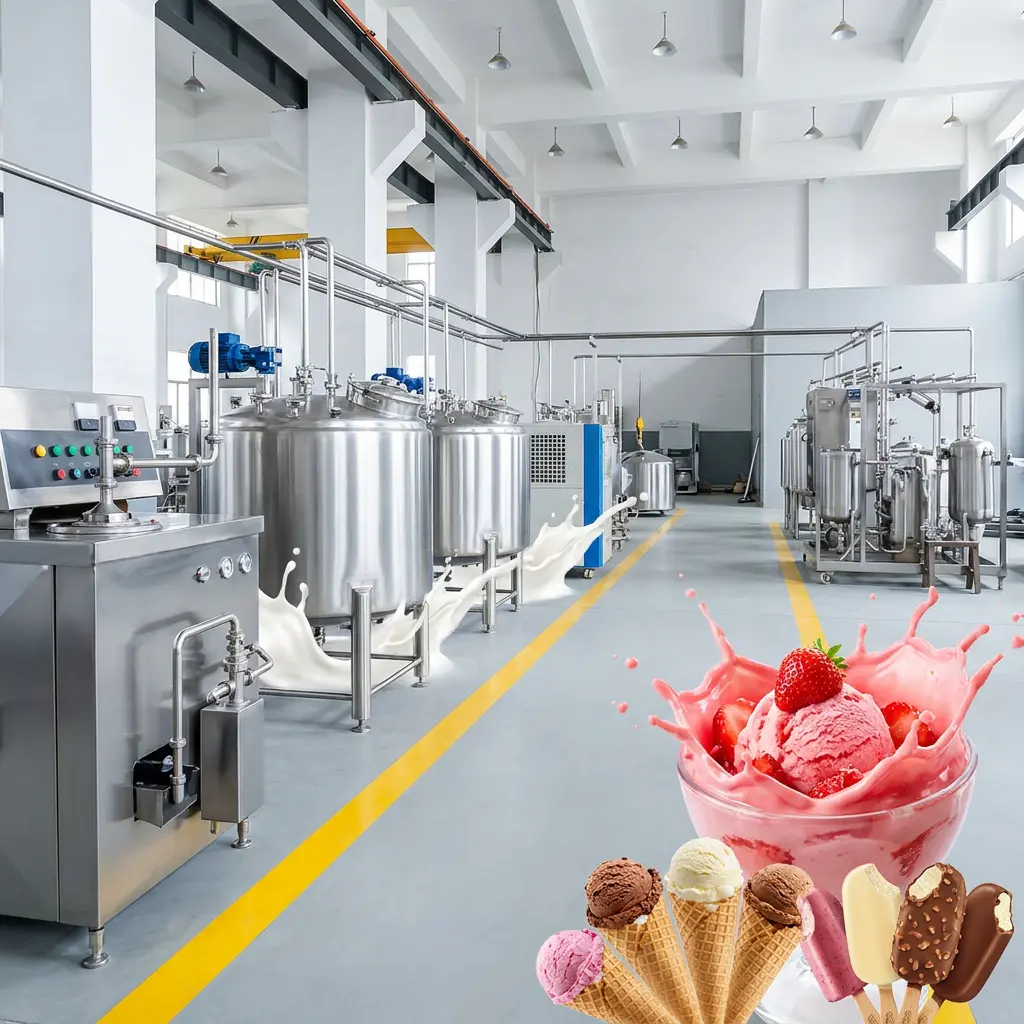
Ice cream may look simple on the surface, but behind every smooth and creamy product is a complete and highly coordinated manufacturing process. From raw material mixing to freezing and final packaging, every production stage directly affects texture, taste, stability, and production efficiency. For companies planning to invest in the frozen dessert industry, choosing the right ice cream production line is not only about equipment costs — it is about building a reliable and scalable processing system.
Many manufacturers make the mistake of focusing only on price while ignoring process compatibility between different machines. Low-cost equipment may reduce initial investment, but mismatched configurations often create bottlenecks later in production. Another critical issue is neglecting cleaning and sanitation systems. Without proper CIP cleaning and sterilization integration, factories may face hygiene risks, unstable product quality, and increased maintenance costs.
A professional ice cream production line should connect every stage smoothly, including ingredient preparation, homogenization, sterilization, aging, freezing, filling, and packaging. Each process must work together efficiently to ensure stable product quality and long-term operational reliability. Proper line planning also helps manufacturers improve automation, reduce labor costs, and support future production expansion.
One of the most common mistakes in building an ice cream production line is choosing equipment based only on price. Many new investors try to reduce initial costs by purchasing low-priced machines from different suppliers without carefully evaluating whether the entire process can operate smoothly together. At first glance, this approach may seem economical, but in actual production, incompatible equipment often creates operational problems that lead to higher long-term costs.
For example, the capacity of the mixing system may not match the homogenizer, or the sterilization system may operate at a different processing speed than the freezer. Once one machine becomes slower than the others, the entire production rhythm is disrupted. This not only affects production efficiency but can also reduce product consistency and increase energy consumption. In ice cream manufacturing, every process is interconnected like gears in a machine. If one part fails to synchronize properly, the overall performance of the production line suffers.
Another issue caused by poor compatibility is difficulty in future expansion. Some manufacturers purchase standalone equipment without considering automation integration, pipeline layout, or control systems. When production demand increases later, upgrading becomes expensive and complicated because the original machines cannot easily connect with new systems. A professionally designed production line should not only meet current production needs but also leave room for future growth and product diversification.
Mismatched configurations are another major challenge in ice cream factory projects. Some production lines are equipped with oversized machinery that exceeds actual capacity requirements, while others suffer from insufficient processing capability. Both situations create unnecessary operational pressure and financial waste. An improperly configured line often results in unstable production flow, inconsistent product quality, and inefficient labor utilization.
For instance, a factory may install a high-capacity freezer while using a small aging tank or limited homogenization capacity. In this case, the freezer cannot receive enough prepared mix continuously, causing downtime and reduced efficiency. On the other hand, if the upstream system produces more mix than the downstream packaging line can handle, product accumulation and waste may occur. Ice cream production depends heavily on timing, temperature control, and continuous processing, which means every machine must be configured according to actual production requirements.
Configuration mismatch can also affect product quality directly. Ice cream texture, overrun, and stability depend on balanced process control. If air incorporation during freezing does not match the formulation or filling speed, the final product may become too dense, too soft, or unstable during storage. Proper engineering design ensures that each stage — from ingredient preparation to final packaging — operates as one coordinated system rather than isolated equipment units.
In dairy and frozen dessert manufacturing, hygiene is one of the most critical factors affecting product safety and factory performance. However, many manufacturers underestimate the importance of cleaning and sanitation systems when planning an ice cream production line. Some companies focus heavily on production equipment while treating CIP cleaning systems and sterilization solutions as secondary investments. This decision can create serious operational and food safety risks later.
Ice cream contains dairy ingredients such as milk, cream, and milk powder, which are highly sensitive to bacterial contamination. If pipelines, tanks, homogenizers, or freezers are not cleaned thoroughly, microorganisms can quickly multiply inside the system. Contamination not only affects product taste and shelf life but may also lead to product recalls and damage to brand reputation. In modern food manufacturing, sanitation is not simply a maintenance task — it is part of the production process itself.
An integrated CIP cleaning system helps manufacturers clean pipelines and processing equipment automatically without dismantling machinery manually. Combined with proper sterilization systems, automated cleaning improves hygiene standards while reducing labor costs and production downtime. Factories that ignore sanitation planning often face inefficient cleaning procedures, inconsistent hygiene management, and higher water and chemical consumption. A well-designed ice cream production line should integrate production efficiency and food safety from the very beginning rather than treating sanitation as an afterthought.
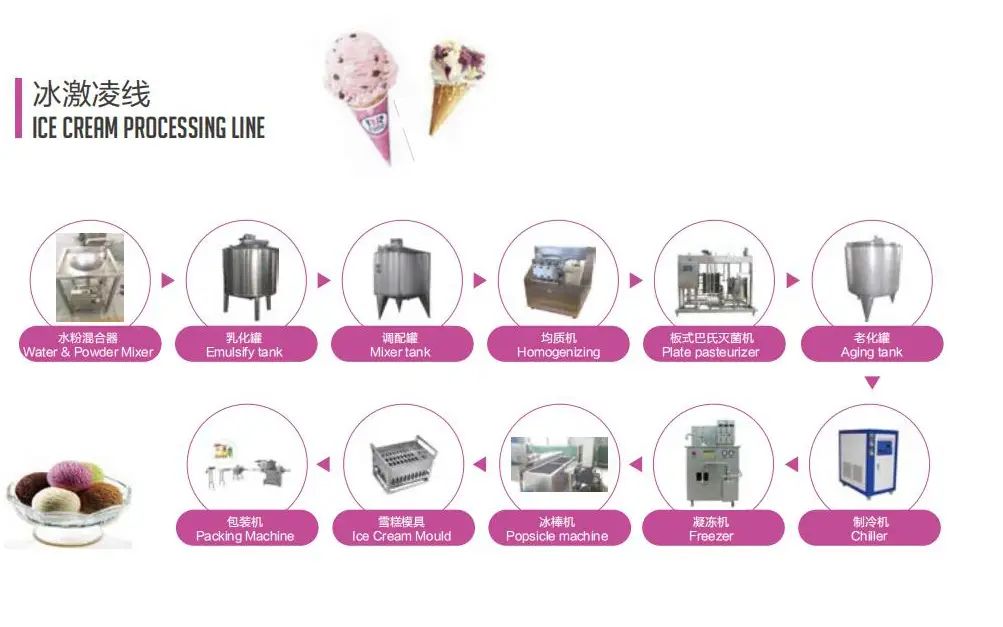
Raw material preparation is the foundation of the entire ice cream manufacturing process. The quality, proportion, and mixing stability of ingredients directly determine the final taste, texture, and consistency of the ice cream. Common raw materials include milk, milk powder, cream, sugar, stabilizers, emulsifiers, and flavoring ingredients. Since different ice cream products require different formulations, accurate ingredient handling is essential for maintaining stable product quality.
During this stage, manufacturers typically use ingredient tanks, sugar dissolving systems, and blending tanks to prepare the ice cream mix. Milk powder and stabilizers must be fully dissolved to prevent clumping, while sugar needs to be evenly incorporated into the liquid mixture. Proper mixing ensures that fats, proteins, sugars, and additives are distributed uniformly before entering the next processing stage. If raw materials are not blended correctly, the final product may suffer from uneven texture, ice crystal formation, or unstable overrun during freezing.
Temperature control is also extremely important during ingredient preparation. Some ingredients dissolve better at higher temperatures, while others require controlled mixing speeds to maintain stability. Automated blending systems can improve accuracy, reduce labor requirements, and minimize human error. In modern ice cream factories, the raw material preparation system is not just a simple mixing process — it is the starting point for creating a stable and high-quality ice cream base.
After the ingredients are fully blended, the ice cream mix enters the homogenization stage. Homogenization is a critical process that breaks down fat particles into much smaller and more uniform sizes. This step significantly improves the texture, stability, and mouthfeel of the final product. Without proper homogenization, fat separation may occur, resulting in rough texture and inconsistent product quality.
Most modern ice cream factories use dual-stage high-pressure homogenization technology. Under high pressure, the liquid mixture passes through narrow valves where fat globules are broken into microscopic particles. The second stage further stabilizes the emulsion and prevents fat clustering. This process creates a smoother and creamier texture while improving the distribution of fat throughout the mixture. Consumers may not see the science behind homogenization, but they can immediately feel the difference in every bite of ice cream.
Homogenization also improves the whipping properties and melting resistance of ice cream. Smaller fat particles help stabilize the incorporated air during freezing, creating a fluffy and delicate structure. At the same time, uniform fat distribution enhances flavor release and gives the product a richer taste experience. In large-scale industrial production, stable homogenization performance is essential for maintaining consistent quality across every production batch.
Once homogenization is completed, the ice cream mixture must go through sterilization to ensure food safety and product stability. Because ice cream contains dairy ingredients, the mixture can easily become contaminated by microorganisms if it is not properly heat treated. Sterilization helps eliminate harmful bacteria while extending shelf life and protecting product quality during storage and transportation.
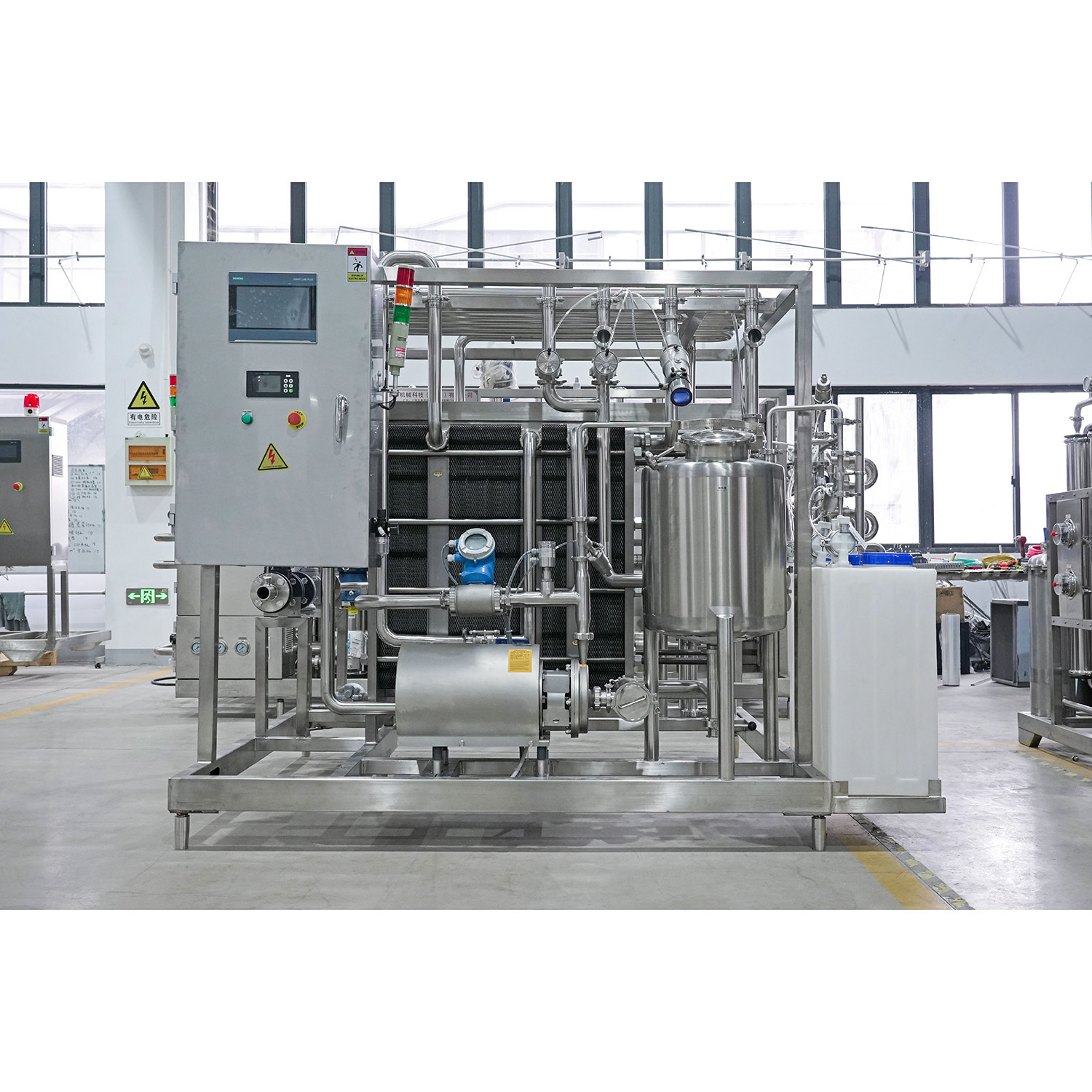
Pasteurization is one of the most commonly used sterilization methods in ice cream production. During this process, the mixture is heated to a specific temperature for a controlled period of time before being cooled rapidly. Many factories also use plate sterilization systems because they provide efficient heat exchange, stable temperature control, and energy-saving performance. Plate sterilizers allow continuous production while maintaining consistent sterilization efficiency throughout the process.
Temperature accuracy is extremely important during sterilization. Insufficient heating may fail to eliminate bacteria completely, while excessive heating can damage flavor, proteins, and nutritional quality. A well-designed sterilization system ensures both food safety and product integrity. In industrial ice cream manufacturing, sterilization is not only a hygiene requirement but also a key step for building consumer trust and maintaining stable commercial production.
After sterilization, the ice cream mixture needs to be cooled before entering the aging stage. The cooled mixture is transferred into an aging tank and maintained at a low temperature for several hours. Although aging may appear to be a passive process, it plays a major role in determining the final texture and structural stability of the ice cream.
During aging, the fat crystallizes gradually while proteins and stabilizers absorb water completely. This process improves the viscosity and whipping properties of the mixture, preparing it for the freezing stage. Proper aging allows the ingredients to interact more effectively, creating a smoother texture and better body in the final product. Without sufficient aging time, the ice cream may become coarse, unstable, or unable to maintain proper overrun during freezing.
Modern aging tanks are usually equipped with insulation systems, agitators, and automatic temperature control functions. Stable low-temperature storage prevents bacterial growth while ensuring uniform maturation of the mixture. In high-capacity factories, automated aging systems also improve production scheduling and process consistency. Aging may take several hours, but this waiting period is essential for producing premium-quality ice cream with a rich and creamy mouthfeel.
After the aging process is completed, the ice cream mixture enters one of the most important stages in the entire production line — freezing. During this stage, the liquid mix is rapidly cooled inside a freezer while air is incorporated evenly into the product. The combination of freezing and controlled air incorporation transforms the mixture into soft and fluffy ice cream with a delicate texture.
Rapid freezing is necessary to create very small ice crystals. Smaller crystals result in smoother texture and better mouthfeel, while large crystals can make the product feel rough or icy. Continuous freezers are commonly used in industrial production because they allow stable temperature control and consistent overrun management. Inside the freezer, rotating blades scrape frozen product from the cooling surface continuously, ensuring uniform freezing efficiency.
Air incorporation is another key factor during freezing. The amount of air added affects product density, texture, and profitability. Too little air creates heavy and dense ice cream, while excessive air may reduce product quality and consumer satisfaction. A properly designed freezing system ensures balanced overrun, stable texture, and efficient production performance. This stage ultimately determines whether the ice cream feels smooth, creamy, and enjoyable to consumers.
After freezing, the semi-finished ice cream moves to the filling and packaging stage. Depending on the product type, the ice cream may be filled into cups, cones, tubs, sticks, or other packaging formats. Filling machines must operate accurately and hygienically to ensure consistent product weight, appearance, and production efficiency.
At this stage, manufacturers may also add chocolate coatings, fruit sauces, nuts, cookie particles, or decorative toppings. Automated filling systems improve speed and consistency while reducing product waste. Once packaged, the ice cream enters the final freezing stage, often called hardening. In hardening tunnels or freezing rooms, the product is exposed to extremely low temperatures to stabilize its structure completely.
Final freezing is critical for maintaining product shape, texture, and shelf life during transportation and storage. Rapid hardening helps prevent large ice crystal formation and preserves the smooth texture created during earlier stages. Once the product reaches the required temperature, it is ready for cold storage, distribution, and retail sales.
Building a modern ice cream factory requires more than standalone machines. Manufacturers need integrated systems that combine efficiency, automation, hygiene, and long-term scalability. Weishu focuses on food machinery and complete production line solutions, helping customers build customized ice cream production systems based on different production capacities and product requirements.
Weishu provides integrated solutions covering ingredient blending, homogenization, sterilization, aging, freezing, filling, and CIP cleaning systems. By optimizing process compatibility and equipment configuration, Weishu helps manufacturers reduce operational risks and improve production efficiency. Automated control systems also support stable product quality while reducing labor costs and energy consumption.
In addition to equipment manufacturing, Weishu offers project planning, installation guidance, technical training, and after-sales support for global customers. From small-scale startups to large industrial factories, customized production line solutions help manufacturers achieve reliable operation, food safety compliance, and sustainable business growth in the competitive ice cream industry.
Building an ice cream production line requires more than simply purchasing equipment. A successful project should consider product positioning, production capacity, factory layout, hygiene standards, and future expansion from the very beginning. Proper planning helps manufacturers reduce operational risks, improve production efficiency, and maintain stable product quality over the long term.
Before selecting equipment, manufacturers should first determine what type of ice cream they plan to produce and what daily output they expect. Different products such as cup ice cream, cones, popsicles, or premium gelato require different processing technologies and packaging systems. Choosing the right production capacity is equally important. Oversized equipment may increase investment and energy costs, while insufficient capacity can limit future business growth.
An efficient ice cream factory depends on smooth coordination between blending, homogenization, sterilization, freezing, and packaging systems. Every machine should match the overall process flow and production rhythm. Proper compatibility improves automation efficiency, reduces downtime, and helps maintain consistent product quality throughout the production process.
Because ice cream contains dairy ingredients, hygiene management is essential. Manufacturers should use food-grade stainless steel equipment, integrated sterilization systems, and automatic CIP cleaning solutions to maintain sanitation standards. Proper hygiene planning not only protects product quality but also helps factories comply with international food safety regulations.
Weishu focuses on food machinery and complete ice cream production line solutions. Based on customer production capacity and product requirements, Weishu provides customized planning for blending systems, homogenization, sterilization, aging, freezing, and packaging equipment.
Weishu integrates CIP cleaning, sterilization, and blending systems into one coordinated production solution. This improves automation efficiency, simplifies operation management, and helps manufacturers maintain stable hygiene standards while reducing labor and maintenance costs.
All equipment is manufactured according to food-grade processing standards using sanitary stainless steel materials. In addition to equipment supply, Weishu also provides installation guidance, operator training, after-sales technical support, and global project delivery assistance to help customers build reliable and scalable ice cream factories worldwide.







 EN
EN