
 EN
EN
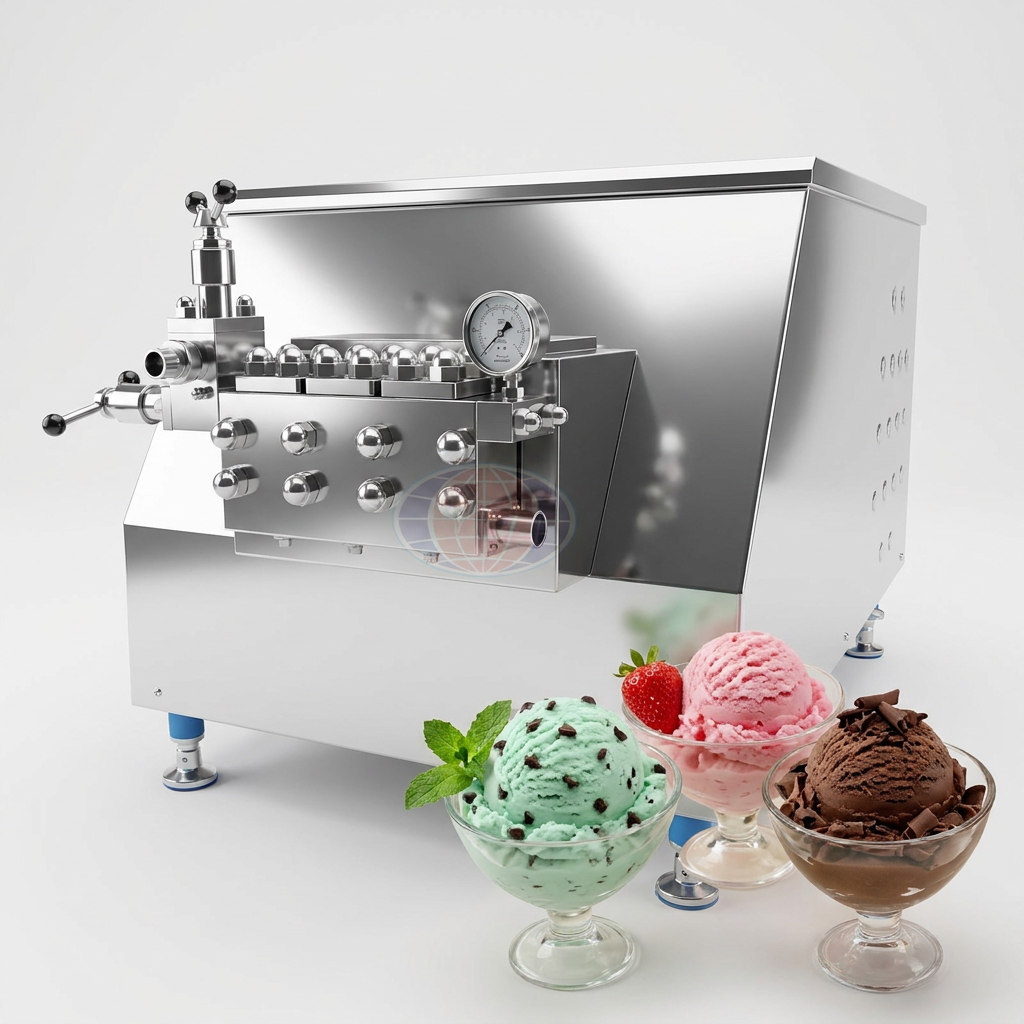
What is an ice cream homogenizer?
In the production of frozen desserts, ice cream homogenizers play an indispensable role. Simply put, an ice cream homogenizer is a highly efficient device that uses high pressure to refine and evenly disperse fat globules in ice cream mix. It can break down larger fat globules into tiny particles, thereby significantly improving the texture, stability, and shelf life of ice cream.
The main function of homogenization in ice cream production
The core functions of ice cream homogenization can be summarized in three points: fat globule refinement, improved emulsion stability, and texture optimization. In unhomogenized ice cream mixes, fat globules vary in size and tend to aggregate and float during freezing, resulting in a "greasy" texture or coarse ice crystals. After homogenization, the diameter of the fat globules can be reduced to 1-2 micrometers, forming a stable and uniform emulsion system, laying a solid foundation for subsequent freezing and aeration processes.
Working principle of dairy homogenizer
The working principle of an ice cream homogenizer is not complicated, but it is highly technical. Driven by a high-pressure plunger pump, the slurry passes through a tiny homogenizing valve gap at extremely high speeds (up to hundreds of meters per second). During this process, the slurry undergoes intense shearing, impact, and cavitation effects, instantly breaking down fat globules. Modern ice cream homogenizers typically employ a two-stage homogenizing valve design: the first stage breaks down the fat globules, and the second stage prevents the small fat globules from re-aggregating, ensuring a consistently stable homogenizing effect.
Why is homogenization so important in frozen dessert processing?
Improve the texture and smoothness of ice cream
Homogenization directly affects the "melt-in-your-mouth" texture of ice cream. When fat globules are refined and evenly dispersed, they can form a finer fat network structure during freezing. This structure not only locks in air and moisture but also significantly reduces the size of ice crystals, giving the ice cream a silky, smooth texture when it melts on the tongue, avoiding any grainy or gritty feel.
Enhance the stability of fat distribution
In unhomogenized ice cream mix, fat tends to rise to the top, forming a "cream layer," while water and solids sink, leading to batch-to-batch inconsistencies. Homogenization ensures that fat globules are uniformly suspended throughout the mix system, preventing stratification even during long-term storage or cold chain transportation. This stability is crucial for large-scale industrial production, guaranteeing consistent quality across every batch.
Improve product shelf stability
Homogenization can also significantly extend the shelf life of ice cream. The refined fat globules and stable emulsification system effectively slow down the rate of fat oxidation and rancidity, reducing the "rancid oil flavor." At the same time, the homogenized mixture is more resistant to temperature fluctuations, maintaining good texture and appearance even under imperfect cold chain conditions. This means the product can maintain high quality over a longer shelf life, reducing returns and losses.
Main application scenarios of ice cream homogenizers
Ice cream production factory
This is the core application area of ice cream homogenizers. Whether it's soft-serve or hard ice cream, whether it's cup-packaged, tub-packaged, or block-packaged, the homogenizer is an indispensable part of the production line. In a typical factory layout, the homogenizer is usually installed after the plate or tubular pasteurizer and before the aging tank, ensuring that the slurry is homogenized at the optimal temperature (usually 65-75℃).
Frozen Yogurt Processing
The production process of frozen yogurt is similar to that of ice cream, but it places higher demands on homogenization. This is because yogurt contains lactic acid bacteria and more protein, resulting in a more complex fat and protein system. High-quality homogenization can prevent yogurt protein precipitation and whey separation, while also giving frozen yogurt a smoother, fresher texture and avoiding a powdery feel.
Dairy beverage production
Besides frozen desserts, ice cream homogenizers are also widely used in the production of dairy beverages and plant-based protein drinks. For example, plant-based beverages such as oat milk, walnut milk, and soy milk can have their texture and stability significantly improved and sedimentation and separation prevented through homogenization. For companies that produce multiple dairy products, a single high-performance homogenizer can achieve "multi-purpose use," greatly improving equipment utilization.
Key features of modern ice cream homogenizers
High-pressure homogenization technology
Current mainstream ice cream homogenizers employ high-pressure homogenization technology, with operating pressures typically between 150-250 bar, and some high-end models exceeding 300 bar. Higher pressure translates to smaller fat globule sizes and better emulsification. Advanced high-pressure homogenizers are also equipped with wear-resistant components such as ceramic plungers and tungsten carbide alloy valve seats, extending equipment lifespan while ensuring efficiency.
PLC Automatic Control System
Modern ice cream homogenizers generally integrate PLC automatic control systems, allowing operators to set pressure, monitor operating status, and record production data via a touchscreen. This automated control system not only reduces human error but also enables联动 control with upstream sterilization equipment and downstream aging tanks, creating a fully automated ice cream production line. Some high-end models also support remote diagnostics and maintenance, further reducing downtime.
Stainless steel sanitary design
Food safety is of paramount importance in dairy processing. The ice cream homogenizer is constructed entirely of stainless steel (SUS304 or SUS316L), and all parts in contact with materials meet food-grade hygiene standards. The hygienic design includes seamless piping, easily disassembled and cleanable homogenizing valve assemblies, and a smooth internal surface treatment, ensuring the equipment can be easily and automatically cleaned via the CIP (Clean In-Place) system, eliminating the risk of microbial growth.
Energy-saving and efficient operation
Energy consumption is a significant cost in ice cream production. Modern homogenizers have significantly reduced energy consumption per unit output by optimizing the plunger drive structure, adopting variable frequency motors, and improving the fluid design of homogenizing valves. Compared to traditional models from ten years ago, the new generation of high-efficiency homogenizers can save 15%-25% of energy consumption, which can result in considerable annual electricity cost savings for factories producing thousands or even tens of thousands of tons per year.
How to choose the right ice cream homogenizer?
Production capacity requirements
The first step in selecting a homogenizer is determining the required capacity. Equipment suppliers typically provide model parameters in liters per hour or tons per hour. It is generally recommended to select a model with a capacity of 1.2 times the factory's peak capacity to allow for future expansion. Common ice cream homogenizers range in capacity from small experimental models of 500L/h to large industrial models exceeding 10,000L/h, meeting the needs of businesses of different sizes.
Pressure and performance standards
Different product formulations have different homogenization pressure requirements. Traditional ice cream bases generally achieve satisfactory results at 150-180 bar; while high-fat content (e.g., over 12% fat) or low-fat ice cream (e.g., 3%-5% fat) require higher pressures (200-250 bar) to compensate for the impact of fat content variations on the emulsion system. When selecting a model, consult the equipment manufacturer and provide detailed formulation parameters to obtain optimal pressure matching recommendations.
Cleaning and maintenance requirements
The ease of cleaning equipment on an ice cream production line directly impacts production efficiency and food safety. When selecting a homogenizer, key considerations should include: whether it supports CIP automatic cleaning, the ease of replacing the homogenizing valve and plunger seals, and the time required for routine maintenance. A well-designed system should allow operators to inspect and replace critical wear parts within 30 minutes without the need for special tools.
Technical support and installation services
Homogenizers are precision equipment, requiring professional support from installation and commissioning to daily operation. Choosing a supplier with excellent after-sales service is crucial. It is recommended to prioritize manufacturers that can provide on-site installation guidance, operation training, spare parts supply, and remote technical support. For factories exporting overseas or to remote areas, the supplier's local service network is also an important consideration.
Ice cream production line related supporting equipment
Ice cream pasteurizer
Before homogenization, ice cream mixes need to undergo pasteurization to kill harmful microorganisms and activate the emulsifying properties of proteins. Common pasteurization equipment includes plate heat exchangers and tubular pasteurizers, which are usually integrated with homogenizers to form a pasteurization-homogenization integrated system.
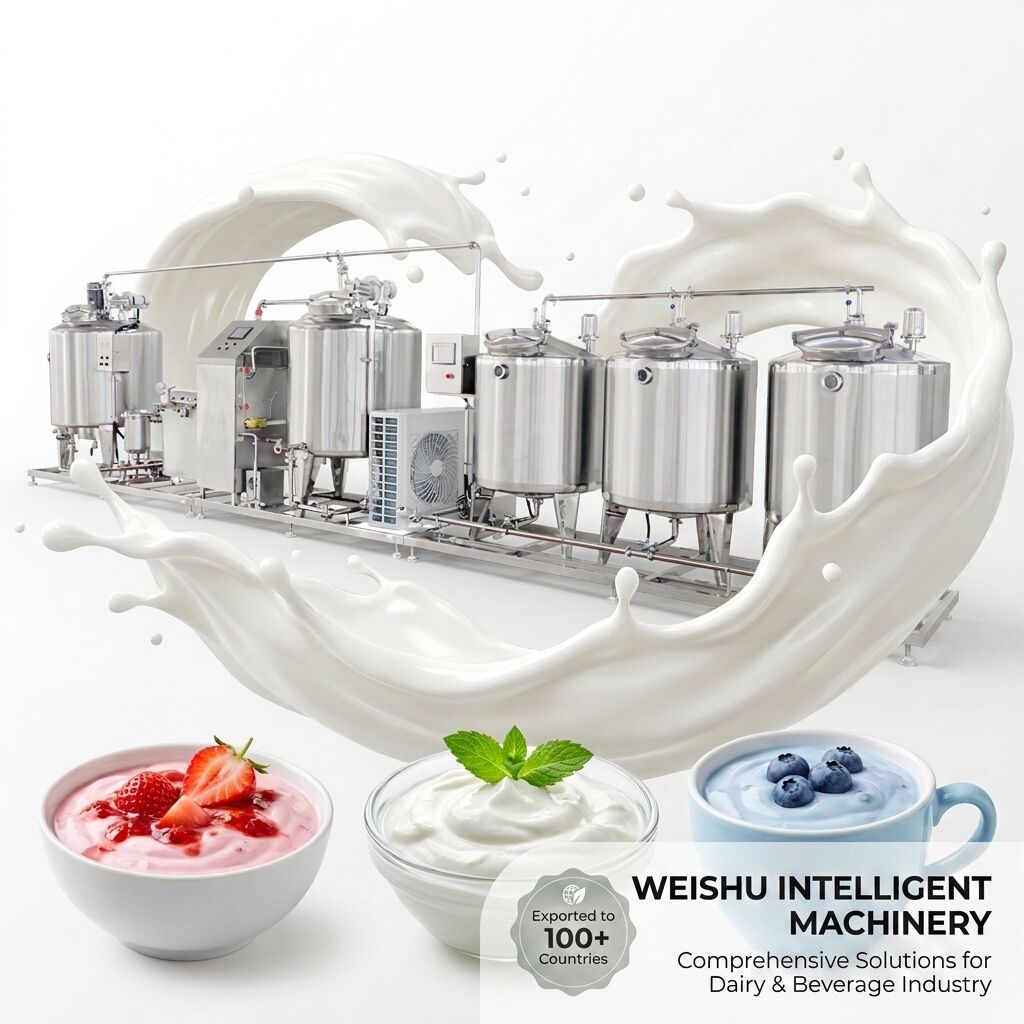
Continuous ice cream freezing machine
After homogenization, the slurry needs to be frozen and aerated in a freezer. The freezer rapidly freezes the slurry to -4°C to -6°C and mixes in 50%-100% air through a scraper heat exchanger and an aeration system to form a semi-fluid ice cream, which is then filled and hardened.
Ice cream aging tank system
The aging tank, located after the homogenizer and before the freezer, is used to age the homogenized slurry at 2-6°C for 4-24 hours. The aging process causes a crystalline film to form on the surface of fat globules and fully hydrates the proteins, thereby increasing the slurry's viscosity and aeration capacity. Aging tanks are typically equipped with a slow-speed agitator and a jacketed cooling system.
Ice cream filling and packaging equipment
Depending on the product form, ice cream filling equipment can be cup filling machines, tub filling machines, extrusion cutting and forming machines, or strip packaging machines. These machines are usually directly connected to freezers to achieve uninterrupted automated production from raw materials to finished products.
How can ice cream production line equipment improve production efficiency?
Automated dairy processing system
By integrating the homogenizer, sterilizer, aging tank, freezer, and filling machine into a PLC central control system, the entire ice cream production process can achieve one-button start/stop, automatic parameter adjustment, automatic fault alarm, and CIP automatic cleaning. The automation system not only significantly reduces the need for manual labor (from 8-10 people per shift on a traditional production line to 3-4 people), but also eliminates human error, ensuring consistent quality for each batch of products.
Integrated Ice Cream Production Solution
Integrated design means that all equipment is compatible in terms of size, flow rate, control, and cleaning methods. Equipment suppliers can provide customized production line solutions based on the actual layout of the factory, capacity targets, and product types. Integrated solutions can also shorten pipeline length, reduce material residue, and lower energy consumption, resulting in an overall increase in production line efficiency of 20%-30%.
Energy-saving measures for industrial ice cream production lines
In addition to using high-efficiency homogenizers, energy conservation throughout the production line can be achieved through heat recovery systems (using the heat from the hot slurry at the sterilizer outlet to preheat the cold slurry), variable frequency drive motors, and automated standby modes. A modern ice cream production line with an annual output of 5,000 tons can save hundreds of thousands of yuan in electricity and gas costs annually through comprehensive energy-saving measures, while also reducing its carbon footprint.
Why choose Weishu ice cream production line equipment?
Customized frozen dessert processing solutions
Weishu boasts over a decade of experience in designing and manufacturing ice cream and dairy equipment. They offer customized solutions, ranging from single homogenizers to complete ice cream production lines, tailored to each client's recipe, production volume, and factory conditions. Whether you're working in a small, artisanal ice cream workshop or a large industrial dairy plant, Weishu has proven solutions to consider.
Reliable manufacturing experience
Weishu equipment adopts German and Italian standard processing technology, and the core components, homogenizing valves and plunger seals, use imported materials to ensure long-term stable operation under high pressure and high frequency conditions. Each piece of equipment undergoes a continuous 8-hour full-load test before leaving the factory to ensure that its performance meets the standards, there is no leakage, and there is no abnormal noise.
Advanced automation technologies for dairy processing plants
Weishu's latest generation ice cream production line is equipped with Industrial Internet of Things technology, supporting remote monitoring, production data analysis, and preventative maintenance alerts. Factory managers can view equipment operating status, output statistics, and energy consumption reports in real time via mobile phone or computer, promptly identifying potential problems and optimizing production plans. For dairy companies pursuing Industry 4.0 upgrades, Weishu provides a reliable technology partner.
Conclusion
Selecting the best homogenizer for a modern ice cream production line
Although an ice cream homogenizer is only one link in the production line, it has a decisive impact on the quality, stability, and production efficiency of the final product. From improving taste and extending shelf life to enhancing stability and reducing energy consumption, a high-quality homogenizer can bring ice cream manufacturers a multifaceted competitive advantage.
When selecting an ice cream homogenizer, companies are advised to comprehensively consider four key factors: capacity requirements, pressure standards, ease of cleaning, and after-sales service, prioritizing suppliers with extensive industry experience and reliable technical support. Furthermore, considering the homogenizer within the overall automation system of the production line is crucial for maximizing efficiency and profitability.
Whether you're planning to build a new ice cream production line or upgrade existing equipment, it's worthwhile to take the time to understand the latest developments in homogenizer technology and to communicate thoroughly with professional equipment suppliers. After all, in the increasingly competitive frozen dessert market, the technological level of the equipment often determines the upper limit of the product's potential.
If you have any questions about selecting an ice cream homogenizer or an entire ice cream production line, please leave a message or consult a professional equipment manufacturer to obtain customized advice based on your factory's specific circumstances.
Table of Contents
- What is an ice cream homogenizer?
- The main function of homogenization in ice cream production
- Working principle of dairy homogenizer
- Why is homogenization so important in frozen dessert processing?
- Main application scenarios of ice cream homogenizers
- Key features of modern ice cream homogenizers
- How to choose the right ice cream homogenizer?
- Ice cream production line related supporting equipment
- How can ice cream production line equipment improve production efficiency?
- Why choose Weishu ice cream production line equipment?
- Conclusion